Neck Pain Physiotherapy in Downtown Ottawa

Personalized care for neck pain, stiffness, and sudden flare-ups — including the kind that wakes you up unable to turn your head.

Group 360
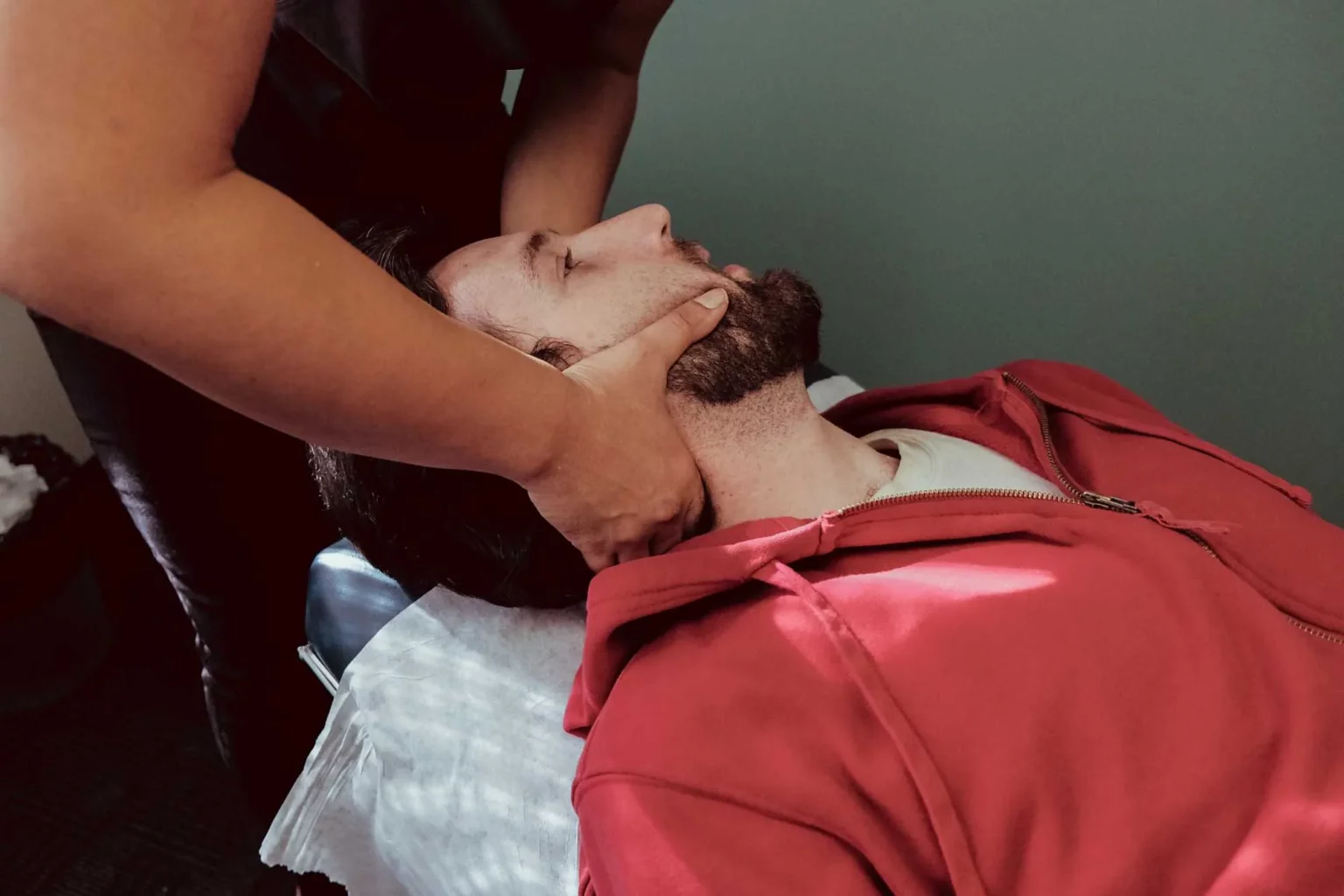
Practitioner supporting a patient's head and neck during treatment
Person sitting on the edge of the bed holding their stiff neck after waking up with neck pain

Woke Up With Severe Neck Pain?

You went to bed feeling fine. You woke up and could barely turn your head. The pain is sharp, your neck feels locked, and even small movements make it worse. When this happens with no warning, it can feel scary.

You are not alone. This is one of the most common reasons people come into our Downtown Ottawa clinic. The good news: sudden neck pain usually has a clear reason behind it, and it is rarely a sign of something serious.

The first step is a proper assessment. It helps you understand what is irritated, which movements to avoid right now, and what treatment may help you move freely again.

Why Sleeping Position Can Trigger Neck Pain

Neck pain after sleeping is more common than people think. When you sleep in an awkward position, your neck can stay bent or twisted for hours. The small joints in your neck, called facet joints, can become irritated. The muscles around them tighten to protect the area. This is why you can wake up with a stiff, sore neck, even when you did not hurt yourself during the day.

A pillow that is too high or too flat can make it worse. So can falling asleep on the couch or in a chair.

Sleep is not the only trigger. Long hours at a desk with a forward head, or looking down at your phone, can strain the same muscles. Over time, this “tech neck” posture can lead to neck pain and even tension headaches.

Person sleeping with their head twisted at an awkward angle that can cause neck pain
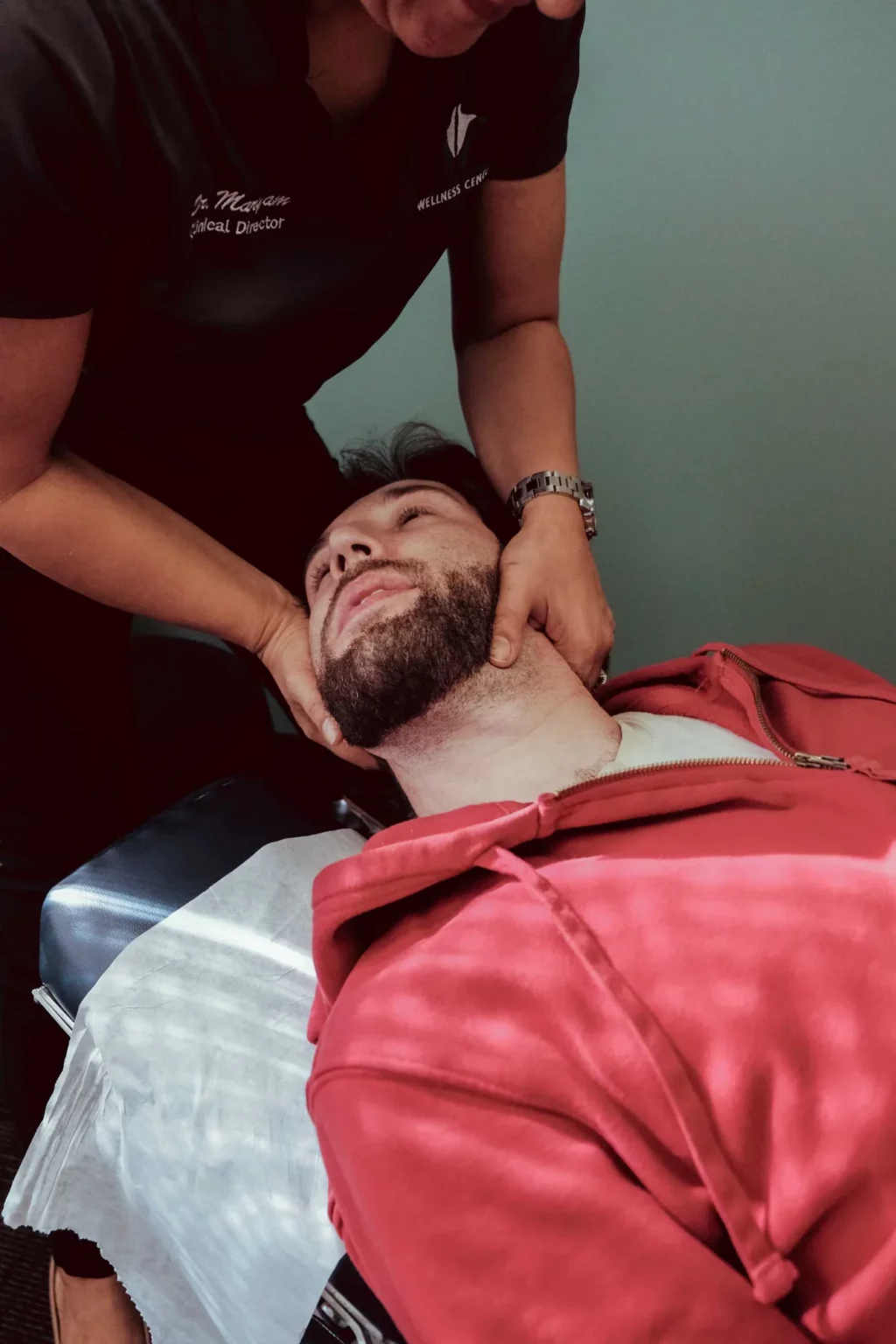
Dr. Maryam assessing a patients neck range of motion at Kent Chiro Med in Downtown Ottawa

When Neck Pain Affects Your Range of Motion

Range of motion is how far you can move your neck in each direction. When your neck is irritated, that range can drop fast. Many people ask, “Why does my neck hurt when I turn my head?” — and limited movement is usually the answer.

You might notice:

Limited movement is your body’s way of guarding a sore area. It is common with sudden neck pain. The goal of care is to calm the irritation and help your neck move more freely again, one step at a time.

What Not to Do When the Pain Is Sharp

When the pain is sharp, what you avoid matters as much as what you do.

Try not to:

Gentle, pain-free movement is usually better than lying still all day. But if a movement makes the pain worse, stop and let it settle. If you are unsure what is safe, a short assessment can guide you.

06 neck pain physiotherapy dry needling upper trapezius kent chiro med

Become a new
patient today!

Book an appointment now!

01 neck pain physiotherapy cervical manual therapy kent chiro med

When Is a Stiff Neck Serious Enough to Get Checked?

Some neck pain settles on its own in a few days. Other times, it needs a closer look.

Consider booking an assessment if:

A proper assessment helps identify what is irritated, which movements to avoid, and which treatment may suit you. Our physiotherapy and chiropractic teams work together to build the right plan for you.

Can Chiropractic Care or Acupuncture Help Neck Pain?

For many patients, yes — these are common options for neck pain, and they are often used together.

Chiropractic care looks at how your neck joints move. Care starts with an assessment and a conversation about your symptoms and comfort level. Our chiropractors are evidence-based, so an adjustment is just one of many tools. If an adjustment is not right for you, they can use gentler options such as mobilization, soft tissue therapy, or rehab exercises. You can ask them to stop at any time.

Acupuncture uses very thin needles to help calm muscle tension and support your body’s natural healing. Many patients find it relaxing, and it pairs well with hands-on care.

In the patient story above, both acupuncture and chiropractic care were part of the plan. Your plan may include chiropractic care, physiotherapy, acupuncture, soft tissue work, rehab exercises, or a mix — based on what we find in your assessment. Some patients feel better quickly, while others need more time. It depends on the cause, the severity, and how your body responds.

When migraines come from the neck — Dr. Maryam explains

Duration: 5:22 • Dr. Maryam Hassanzadeh explains how she assessed and cared for a patient whose headaches were linked to her neck

What You Can Do at Home Before Your Appointment

While you wait for your visit, these simple steps may help you stay more comfortable:

If you are thinking about any pain medication, check with your pharmacist or doctor first. These steps are general guidance, not a treatment plan. For a sharp or lasting stiff neck, the clearest next step is a proper assessment.

Person applying a cold pack to their neck at home to ease pain before their appointment

What Causes a Stiff Neck or Neck Pain?

At any given time, about 10% to 20% of people deal with neck pain. The cause is not always the same. Here are the most common ones we see in Downtown Ottawa.

Sleeping in an Awkward Position

A bent or twisted neck overnight can irritate the joints and tighten the muscles, which is why so many people wake up with a stiff neck.

Poor Posture and "Tech Neck"

Sitting at a desk with a forward head, or looking down at a phone for long periods, can strain the neck muscles and lead to pain.

Joint Wear and Tear

The joints in your neck can wear down with age, which can cause pain. Osteoarthritis is one common reason, as it thins the cartilage between the bones in your neck.

Disc Problems

Sometimes a disc in the neck bulges and presses on a nerve. This can cause sharp neck pain, plus tingling or weakness in the arm.

Injuries

Whiplash is a common cause of neck pain. It often happens in a car accident or a high-impact sport, when the head whips back and forth and strains the soft tissue at the back of the neck.

05 neck pain physiotherapy neck mobility treatment kent chiro med

Types of Neck Pain We Treat

Treatment Options for Neck Pain

Your treatment depends on the cause of your pain. Here are some of the options our neck pain specialists may use.

Manual therapy

Hands-on techniques to help stiff joints and tight muscles move better.

TENS Therapy

Gentle electrical impulses that may help reduce pain.

Traction

A gentle technique that eases pressure on the neck. It may help when a nerve is irritated.

Hot and Cold Packs

Cold packs may help reduce swelling. Heat packs may help loosen stiff muscles.

TECAR Therapy

TECAR (Transfer of Energy Capacitive and Resistive) therapy is an advanced treatment that delivers gentle energy deep into the tissues to support natural healing. Kent Chiro-Med is the exclusive provider of TECAR therapy in Ottawa.

Become a new
patient today!

Book an appointment now!

Why Patients Choose Kent Chiro-Med for Neck Pain

Visit our Downtown Ottawa clinic for care built around you.

Care Plans Built Around You

No two patients are alike. We listen, look for the root cause of your neck pain, and plan your care from there.

Experienced Neck Pain Specialists

Our physiotherapists and chiropractors have years of experience treating neck pain. We aim to address the cause, not just the symptoms.

Focus on Prevention

Much neck pain comes from posture and sleep habits. We can help you set up a better workstation and improve how you sit, stand, and sleep.

A Range of Options

From manual therapy to TECAR, we can match your treatment to your situation and your comfort level.

Patient Testimonial

Real Results from Real Patients

F Sultan
F Sultan
★★★★★
I had a great experience at Kent Chiro-Med! From the moment I walked in, the staff were welcoming and professional. They go above and beyond to accommodate scheduling appointments. Dr. Courtney, Dr. Maryam, and Ms. Narjes relieved my low back pain, neck pain, and migraines. I came here after a very bad car accident and can finally say I have hope with the treatment I’m receiving, as I’ve already noticed improvement. I can confidently say this is the best clinic in the city—and I’ve tried many other places. Read on Google
Ben H
Ben H
★★★★★
I have a lot of physical trauma from military service and suffer from arthritis. I have knee, neck, back, and elbow pain and lack of mobility. I've had these problems for over 10 years and nothing was working until I met Ghaith. Ghaith provided significant relief from pain, improvement in function of my joints, muscles, and ligaments, and helped me avoid surgeries. He found other issues that were sources of the symptoms and by addressing those it provided relief for things that had been plaguing me for over a decade... Read on Google

Ladan Ghafari
Ladan Ghafari
★★★★★
I have been suffering from severe neck pain for the past two months and have tried other physiotherapy clinics before, but Kent Chiro has been absolutely exceptional. Today, Annas worked with me for about half an hour and made it possible for me to get back to my daily life, even just a little. He is incredibly skilled, patient, attentive, and highly professional. I truly hope that with his help, I can finally get rid of this pain. Read on Google

Before You Book

Common Questions Patients Ask

Real questions we hear at the clinic — answered clearly, so you know what to expect.

Most of the time, no. Neck pain after sleeping is often caused by an irritated joint or tight muscles, not serious damage. Still, if the pain is severe, not improving, or spreading into your arm, it is worth getting it assessed so you know what is going on.

One-sided neck pain often comes from sleeping with your head turned, holding a phone between your ear and shoulder, or tight muscles on that side. It is usually not serious, but a quick assessment can confirm the cause and point you to the right care.

Most stiff necks ease within a few days. Get it checked sooner if the pain is severe, you cannot turn your head, it spreads into your arm or hand, or it comes with bad headaches. Pain that follows a fall or car accident should also be assessed.

Gentle, pain-free movement is usually better than full rest. Staying frozen in one spot can make stiffness worse. The key is to avoid movements that sharpen the pain. If you are unsure what is safe, an assessment can guide you.

Recovery depends on the cause of your pain, how severe it is, how long you have had it, and how closely you follow your care plan. Some patients feel better quickly. Others may need several weeks or longer to fully recover.

At Kent Chiro-Med, the first step is to assess what may be causing your pain, explain what is irritated, and build a treatment plan that supports both pain relief and better long-term movement. Here is what to expect at your first visit.

In many cases, you do not need to stop completely. The better approach is often to adjust the right exercises, lower the intensity for a while, avoid movements that make symptoms worse, and rebuild gradually.

Your practitioner can help you understand which movements are safe and when to progress. If you train hard, our sports physiotherapy team can guide a safer return to activity.

Not always — many patients keep working with modified duties, which take stress off the irritated area. That may mean avoiding heavy lifting, repetitive bending, or long periods in one position. If your pain is severe, getting worse, or limiting your movement, a proper assessment can help decide whether rest, modified duties, or more care is needed. 

Your first visit is focused on understanding what is causing your pain and helping you feel clear about the next step. Your practitioner will review your health history, ask about your symptoms, assess your movement, and explain what may be contributing to the issue.

From there, they will recommend a treatment plan based on your condition, goals, and comfort level. When appropriate, treatment may begin during your first visit. If you are in severe pain, your practitioner may set aside time to begin treatment to reduce the pain, as long as the assessment and diagnostic process is not compromised.

Feeling nervous about a chiropractic adjustment is completely normal, especially on your first visit. At Kent Chiro-Med, care starts with an assessment and a conversation about your symptoms, your comfort level, and your treatment options.

Our chiropractors are evidence-based and science-driven, so they have many tools to work with, and an adjustment is just one of them. If an adjustment is not right for you, or you are not comfortable with it, your practitioner can suggest other options such as mobilization, soft tissue therapy, acupuncture, rehab exercises, or modalities like shockwave therapy, TECAR therapy, spinal decompression, or physiotherapy-based care.

The goal is always to match the treatment to your condition and your comfort level.

Pain relief and full recovery are not always the same thing. Some patients feel better before the underlying movement habits, strength imbalances, posture patterns, or joint restrictions are fully addressed. When that happens, the pain can return.

Ongoing or maintenance care may help support long-term mobility, reduce recurring flare-ups, and help you stay active after the initial pain has improved. The right plan depends on your condition, goals, and lifestyle. You can see treatment options and pricing here.

An x-ray or MRI is not recommended for everyone before treatment. However, if your practitioner feels your symptoms need further investigation, they can contact your family doctor to discuss it.

Invasive surgery is not usually needed. A very small percentage of people require invasive procedures. We will discuss your diagnosis and recommended plan of action with you. If needed, we can contact your general practitioner to decide the best course of action. Physiotherapy proves to be helpful for most patients. Our recommended strategies and exercises can help prevent problems in future.

TECAR therapy is completely safe and non-invasive for treating neck pain, cervicalgia, and whiplash injuries. It uses radiofrequency energy to generate natural healing responses within your tissues without any radiation or harmful side effects. The treatment is well-tolerated by most patients, with many experiencing immediate pain relief.

However, TECAR therapy is not recommended for patients with pacemakers, during pregnancy, or in areas with active infections. Your physiotherapist will assess your suitability for this advanced treatment.

Still have a question?
The clearest next step is a proper assessment.

Ready to Move More Freely Again?

Recovering from neck pain takes time, and the right plan makes a difference. To get the most from your care:
Call