











Chiropractic Care in Ottawa That Starts by Understanding Your Pain
One Location
Associated With
What Is a Chiropractic Adjustment?
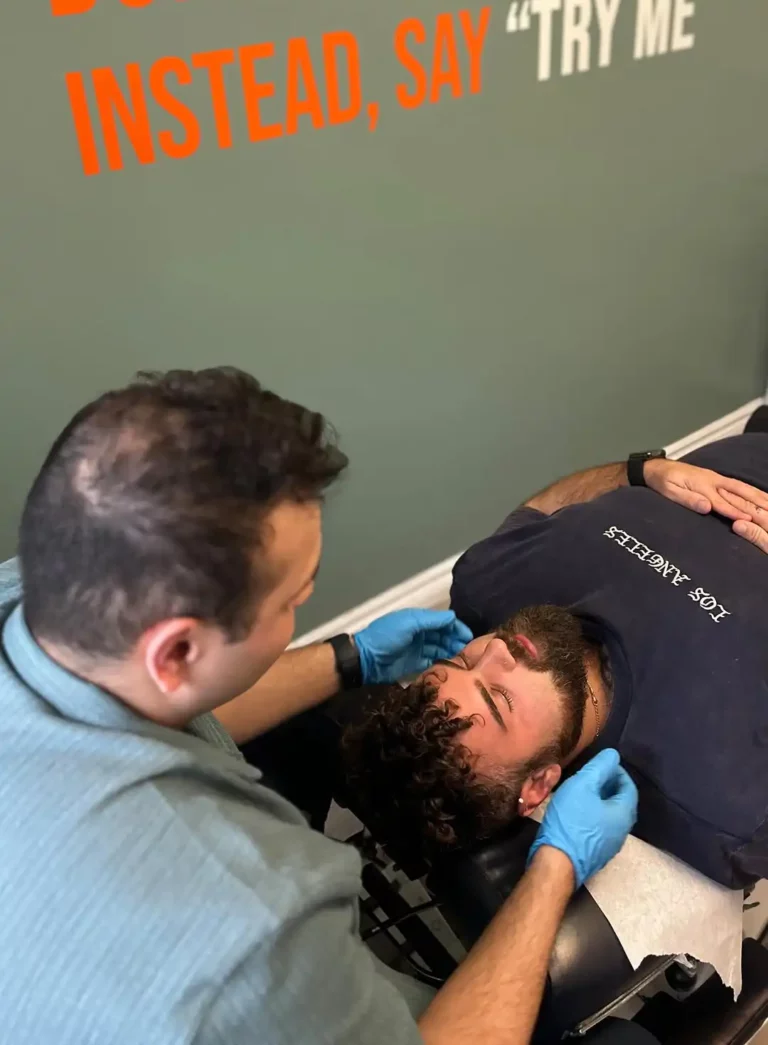
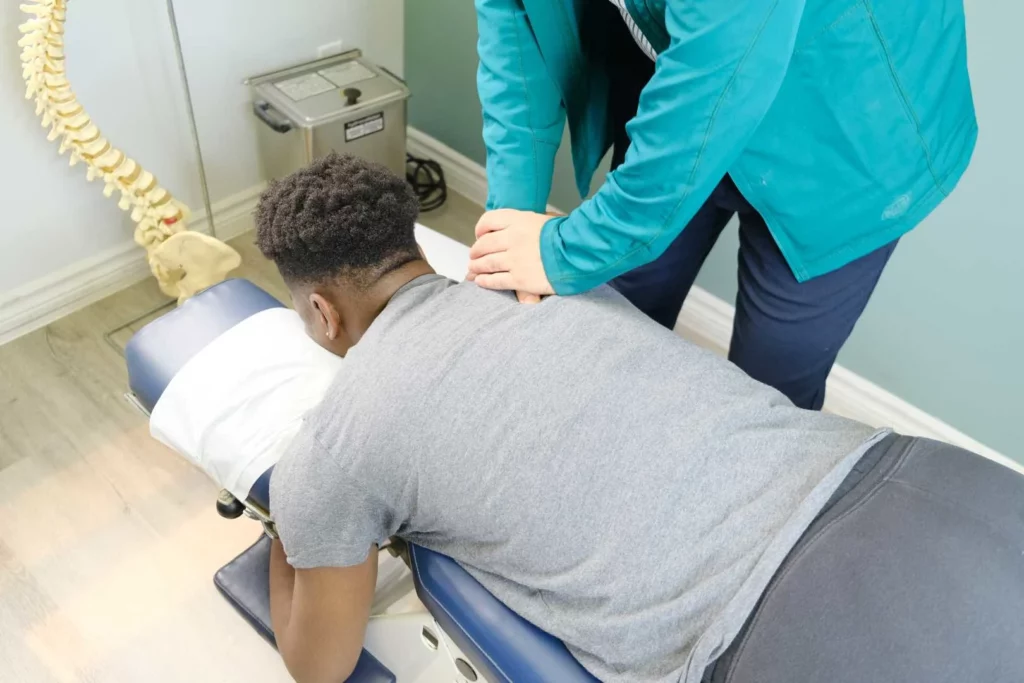
A chiropractic adjustment is a careful, hands-on movement applied to a joint in your spine or body. The goal is to improve how the joint moves and to reduce pain in the area. Joints can become stiff or irritated for many reasons, such as posture, an old injury, arthritis, pregnancy, or sports strain.
Many people ask about the “popping” sound. That sound is called cavitation. It is harmless. It happens when a small amount of gas is released from the joint as it moves, which can ease pressure and stiffness. The sound is not your bones, and it is not a sign that anything went wrong.
An adjustment is only one of the tools our Ottawa chiropractors use. The right approach depends on your assessment, your condition, and your comfort level.
How Chiropractic Can Help You
- Reduce Neck & Back Pain
- Reduce frequent headaches
- Manage scoliosis & kyphosis
- Improve nerve pain
- Reduce inflammation
- Heal from sports injuries
- Improve athletic performance
- Treat Vertigo
- Heal from motor vehicle accidents
- Recover from surgery
What Happens Before Any Treatment
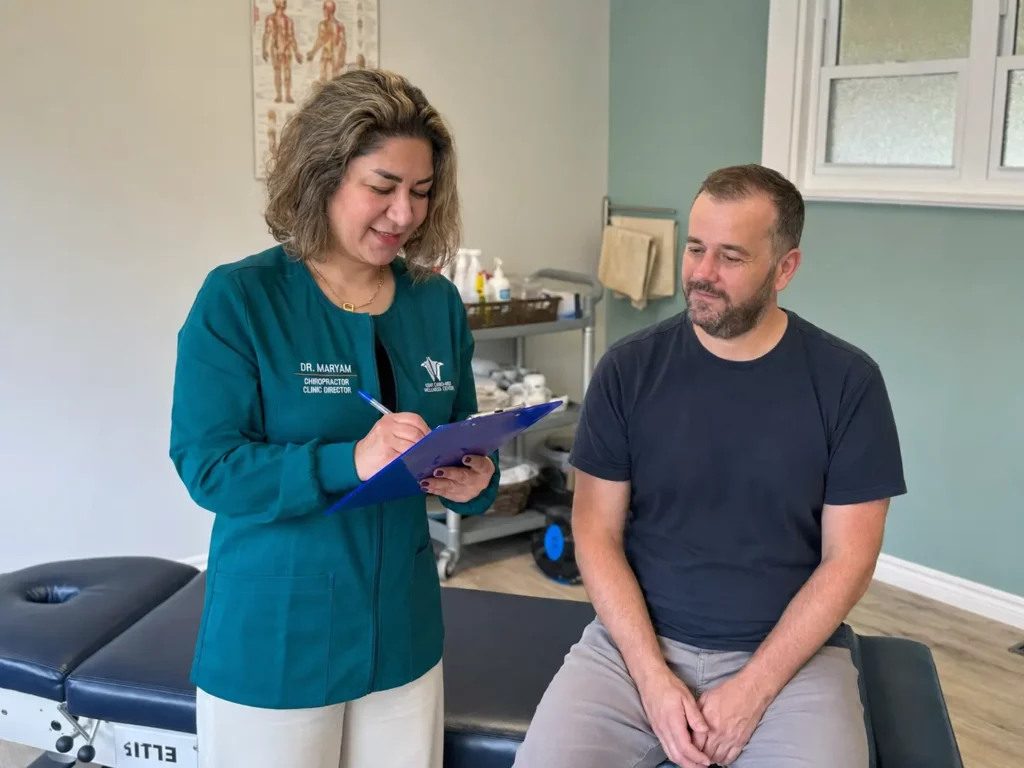
We do not start with an adjustment. We start by understanding your pain.
- Review your health history and what brought you in.
- Ask about your symptoms, your daily activities, and your goals.
- Assess how you move and check the area that is bothering you.
- Explain what we found in plain language, and answer your questions.
- Suggest a care plan built around your condition and your comfort.
When it makes sense, treatment may begin during your first visit. If you are in a lot of pain, your practitioner may start gentle care to help reduce it, as long as a proper assessment is still done first. See what to expect at your first visit.
When We Use an Adjustment — and When We Don't
An adjustment is not right for everyone, and that is okay. For some people and some conditions, a gentler option is the better choice.
Instead of a manual adjustment, we may use joint mobilization. These are gentle, slow movements that improve range of motion. We often choose this approach for conditions such as osteoporosis, spinal or joint fusion, recovery after surgery, pre-existing spinal damage, or severe arthritis.
Our chiropractors are evidence-based and science-driven. We match the method to your assessment and your comfort, and we re-check your progress along the way.
If You're Nervous About Adjustments
Feeling nervous is normal, especially on a first visit. An adjustment is always your choice, never a requirement. If it is not right for you, your practitioner can suggest other options, such as:
- Joint mobilization (gentle, slow movements)
- Soft tissue and myofascial release therapy
- Acupuncture
- Rehab and at-home exercises
- Modalities like shockwave or spinal decompression
- Physiotherapy-based care
We will explain each option and move at a pace you are comfortable with. You can stop or ask questions at any point.
Is Chiropractic Care Safe?
For most people with new or long-term joint and muscle pain, chiropractic care is a safe, non-surgical option that is backed by research. Safety comes from doing the right assessment first and choosing the right method for your case.
A few things shape how we keep care safe at Kent Chiro-Med:
- We assess before we treat, and we only order imaging when it is medically needed.
- We do not take full-spine X-rays or X-ray every new patient.
- We avoid one-size-fits-all plans and we re-assess your progress.
- We choose gentler options when an adjustment is not suitable.
- Our chiropractors complete continuing education every year to stay current.
If you have a specific health condition, tell your practitioner during your assessment so we can plan care that is safe for you.
Chiro Treatment Costs
- Victims of motor vehicle accidents
- Patients recovering from surgery
- Athletes
- People suffering from acute & chronic pain
Book An Appointment
- Sports Injuries
- Neck Pain
- Back Pain
- Headaches
- Generalized muscle tension
- Tingling & Numbness in upper/lower extremities
- Muscle strains
- Joints Sprains
- Tendinitis
- Pre & Post Operative Recovery
- Chiropractic Adjustments
- Spinal Decompression
- Shockwave
- Acupuncture
- Myofascial Release therapy
- Graston Technique
- Custom orthotics
Meet our Chiropractors
Each Chiropractor brings unique care skills to the table. We invite you to read their biographies to see who is the right fit for you.
Meet Dr. Maryam
Duration: 0:37 • Meet our Clinical Director and learn why patients call her their “Mama Bear
Why people choose us?
Our treatments are done in private rooms and not open spaces.
We are proud to support a 5-Star Google and Facebook rating
from our patients.
We offer multiple services and treatments all in one location.
We provide educational tips and rehabilitative exercises for at-home care.
We sell custom orthotics and other healthcare products.
Join many others in healing
Visiting Our Downtown Ottawa Chiropractic Clinic
Our clinic sits in the heart of downtown Ottawa at 563 Gladstone Avenue. If you are looking for a chiropractor near you in the city centre, we are easy to reach, with free street and building parking and transit close by.
Hours
Monday – Thursday
Friday
Saturday
Sunday
9 AM – 6 PM
9 AM – 3 PM
8 AM – 3 PM
Closed
What a chiropractic adjustment is
Explained by our chiropractors
28 min • Kent Chiro-Med Podcast, Ep. 2 — Chiropractic Adjustments: the science and experience
Before You Book
Common Questions Patients Ask
Real questions we hear at the clinic — answered clearly, so you know what to expect.
Is chiropractic care safe?
For most people with joint or muscle pain, chiropractic care is a safe, non-surgical option backed by research. We keep it safe by assessing you first, choosing the right method for your case, and only ordering imaging when it is medically needed. Our chiropractors are evidence-based, and an adjustment is only one of the tools they may use.
Does a chiropractic adjustment hurt?
Most people feel little or no pain during an adjustment, and many feel looser afterward. If an area is very sore, your practitioner can use a gentler method or a different option. Tell your practitioner what you feel at any point, and they will adjust the approach.
Do you have to "crack" my back or neck?
No. An adjustment is a choice, not a requirement. The popping sound, called cavitation, is harmless gas leaving the joint, not your bones. If you would rather avoid it, your practitioner can use mobilization, soft tissue therapy, acupuncture, rehab exercises, or other options instead.
What happens during the first visit?
Your first visit is focused on understanding what is causing your pain and helping you feel clear about the next step. Your practitioner will review your health history, ask about your symptoms, assess your movement, and explain what may be contributing to the issue.
From there, they will recommend a treatment plan based on your condition, goals, and comfort level. When appropriate, treatment may begin during your first visit. If you are in severe pain, your practitioner may set aside time to begin treatment to reduce the pain, as long as the assessment and diagnostic process is not compromised.
Will I be adjusted on my first visit?
Not always. The first visit focuses on understanding your pain through a proper assessment. When it is suitable and you are comfortable, treatment may begin the same day. If a lot of pain is present, gentle care may be started to ease it, as long as the assessment is still done first.
What if I'm nervous about a chiropractic adjustment?
Feeling nervous about a chiropractic adjustment is completely normal, especially on your first visit. At Kent Chiro-Med, care starts with an assessment and a conversation about your symptoms, your comfort level, and your treatment options.
Our chiropractors are evidence-based and science-driven, so they have many tools to work with, and an adjustment is just one of them. If an adjustment is not right for you, or you are not comfortable with it, your practitioner can suggest other options such as mobilization, soft tissue therapy, acupuncture, rehab exercises, or modalities like shockwave therapy, TECAR therapy, spinal decompression, or physiotherapy-based care.
The goal is always to match the treatment to your condition and your comfort level.
How long will it take to feel better?
Recovery depends on the cause of your pain, how severe it is, how long you have had it, and how closely you follow your care plan. Some patients feel better quickly. Others may need several weeks or longer to fully recover.
At Kent Chiro-Med, the first step is to assess what may be causing your pain, explain what is irritated, and build a treatment plan that supports both pain relief and better long-term movement. Here is what to expect at your first visit.
Can I keep going to the gym during treatment?
In many cases, you do not need to stop going to the gym completely. The better approach is often to adjust the right exercises, lower the intensity for a while, avoid movements that make symptoms worse, and rebuild gradually.
Your practitioner can help you understand which movements are safe, which ones to avoid for now, and when it may be time to progress. If you train hard, our sports physiotherapy team can guide a safer return to activity.
Should I take time off work?
Not always. Many patients can keep working with modified duties, especially when the job can be adjusted to reduce strain on the painful area.
If your pain is severe, getting worse, limiting your movement, or affecting your ability to work safely, a proper assessment can help decide whether rest, modified duties, or more care may be needed.
Can I keep working with modified duties?
Often, yes. Modified duties can help you stay active while taking stress off the injured or irritated area. This may mean avoiding heavy lifting, repetitive bending, long periods of sitting or standing, or movements that trigger pain.
The right recommendation depends on your condition, your job demands, and what we find during your assessment.
Why does pain come back?
Pain relief and full recovery are not always the same thing. Some patients feel better before the underlying movement habits, strength imbalances, posture patterns, or joint restrictions are fully addressed. When that happens, the pain can return.
Ongoing or maintenance care may help support long-term mobility, reduce recurring flare-ups, and help you stay active after the initial pain has improved. The right plan depends on your condition, goals, and lifestyle. You can see treatment options and pricing here.
What is chiropractic care?
Chiropractic care is a common, non-surgical approach used to help manage many types of pain and movement problems. This can include spine and joint injuries, sports injuries, pain after a car accident, pregnancy-related pain, headaches, and more. The goal is to support better movement and comfort without medication or surgery.
Chiropractic care is relaxing, safe, and backed by research for many people dealing with new or long-term joint and muscle pain. At Kent Chiro-Med, our chiropractors are evidence-based and science-driven, so an adjustment is only one of the tools they may use, depending on your assessment.
What can chiropractic care help with?
Our chiropractors often help patients with:
- Pain relief and better daily comfort
- Improved range of motion and mobility
- Walking and gait
- Posture and ergonomics
- Balance and agility
- Muscle strengthening
The right approach depends on your condition, goals, and what we find during your assessment. Care may include chiropractic treatment, physiotherapy, acupuncture, soft tissue therapy, rehab exercises, or a combination, so your plan is built around you.
I had a bad experience with another chiropractor. What makes your care different?
We are sorry your past experience was not a good one. Many of our patients came to us after feeling let down somewhere else, and a big part of our work is helping them feel confident in chiropractic care again.
A few things set our approach apart:
- We do not take X-rays for every new patient, and we do not perform full-spine X-rays. We rely on careful assessment, experience, and clinical judgment, and only order imaging when it is medically needed.
- We do not use one-size-fits-all plans or suggest that you need a lifetime of quick adjustments. Each plan is built for your case, and we re-assess to check your progress.
- Our chiropractors and physiotherapists complete continuing education every year to stay current with research.
- We work as a team with medical doctors, physiotherapists, occupational therapists, massage therapists, nutritionists, and kinesiologists.
Our focus is honest, individualized care that helps you get back to your normal, active life.
How is chiropractic care covered in Canada?
Chiropractic visits are usually paid through private or group health insurance. Many providers, such as Sun Life, Manulife, Canada Life (Great-West Life), and Blue Cross, include chiropractic coverage.
Because each plan is different, it is a good idea to call your insurance company directly to confirm how much of your chiropractic care is covered. Please note that we do not offer direct insurance billing, so payment is made at the time of your visit.
If an X-ray is medically needed, it can be covered through OHIP at any CML laboratory. You will need an X-ray requisition form from a chiropractor or medical doctor to qualify.
Can I see a chiropractor while pregnant?
Yes. Chiropractic care can be a safe option during pregnancy. Our chiropractors use gentle techniques to help manage joint and muscle pain that often comes with pregnancy.
As always, your practitioner will start with an assessment and adjust the approach to your stage of pregnancy and your comfort level.
Still have a question?
The clearest next step is a proper assessment.