





Shoulder Physiotherapy That Gets You Moving Again
Physiotherapy and chiropractic care for shoulder pain in Ottawa. No referral needed.
- 30-minute one-on-one sessions with your physiotherapist — no assistants, no handoffs.
- Rotator cuff, frozen shoulder, impingement — we find the cause before we treat.
- 5.0 Google rating from 818 reviews. Free 15-minute consultation to start.
Associated With
Why Does Your Shoulder Hurt?
Your shoulder is the most mobile joint in your body. That mobility comes with a trade-off: it is also one of the most vulnerable.
Here are the most common reasons people come to our clinic with shoulder pain:
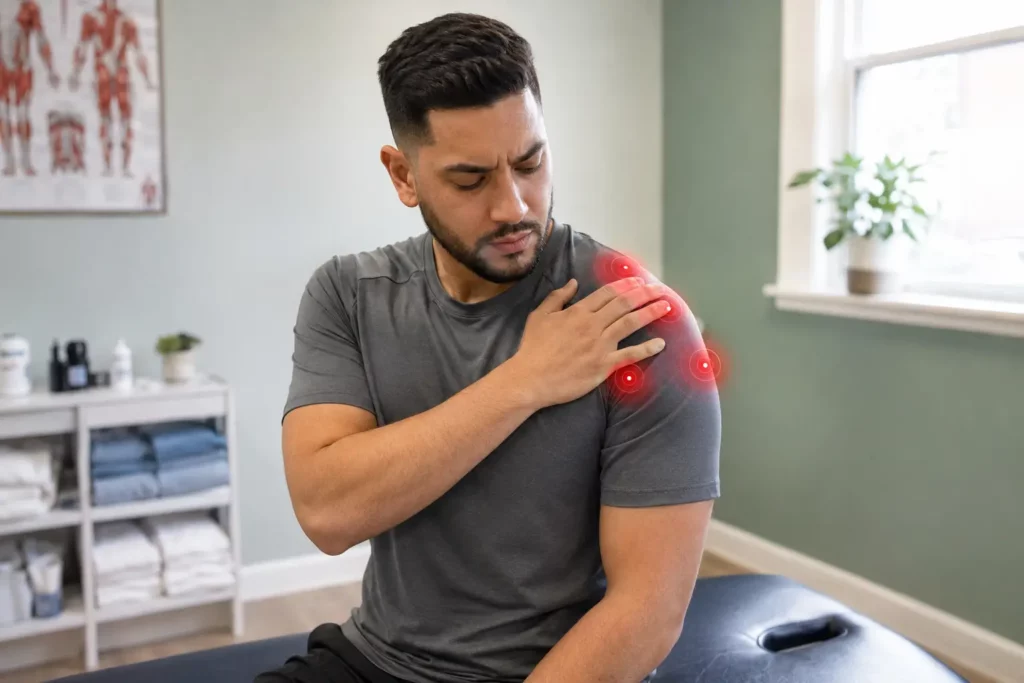
- Rotator cuff injury: The group of muscles and tendons that hold your shoulder together gets strained, partially torn, or fully torn. This is the #1 cause of shoulder pain we treat. You will feel a deep ache, weakness when lifting, and trouble sleeping on that side.
- Frozen shoulder (adhesive capsulitis): The tissue around your shoulder joint thickens and tightens. Movement becomes painful and limited. It gets worse gradually, then slowly improves — but recovery without treatment can take 1–3 years.
- Shoulder impingement: When you raise your arm, the tendons in your shoulder get pinched between the bones. You feel pain at about 90 degrees of lift. This is common in desk workers and anyone who does overhead movements.
- Tendinitis and bursitis: Inflammation of the tendons or the fluid-filled sacs that cushion your shoulder joint. Often caused by repetitive motions or poor posture.
- Sports injuries: Hockey checks, gym accidents, falls on an outstretched arm — Ottawa is an active city, and sports-related shoulder injuries are something our team handles regularly.
- Post-surgical stiffness: If you have had shoulder surgery, physiotherapy is an important part of recovering movement and strength.
If your shoulder pain wakes you up at night, limits your arm movement, or has lasted more than two weeks — it is time to get it checked.
That shoulder pain? Try this quick release with Dr. Courtney
Duration: 0:20 • Dr. Courtney Broadhurst shows a simple ball release for tight shoulder muscles

When Should You See a Professional for Shoulder Pain?
Not every shoulder ache needs clinical treatment. But here is how to tell when yours does:
- Your pain has lasted more than 2 weeks and is not improving
- You cannot lift your arm above your head or behind your back
- You feel weakness or instability in the joint
- The pain disrupts your sleep
- You had a fall, collision, or sudden injury
- You notice swelling, redness, or warmth around the shoulder
Should you see a physiotherapist or a chiropractor? At Kent Chiro-Med, you do not have to choose. Our team assesses your condition and routes you to the right practitioner — or both. Chiropractic care uses joint adjustments and hands-on treatment. Shoulder physiotherapy rebuilds strength and range of motion. Many of our shoulder patients benefit from both as part of a complete shoulder pain treatment plan.
How to avoid shoulder impingement during your workout
Duration: 8:54 • Ghaith Dhaidan, Physiotherapist, explains how to protect your shoulders while training
How We Treat Shoulder Pain at Kent Chiro-Med
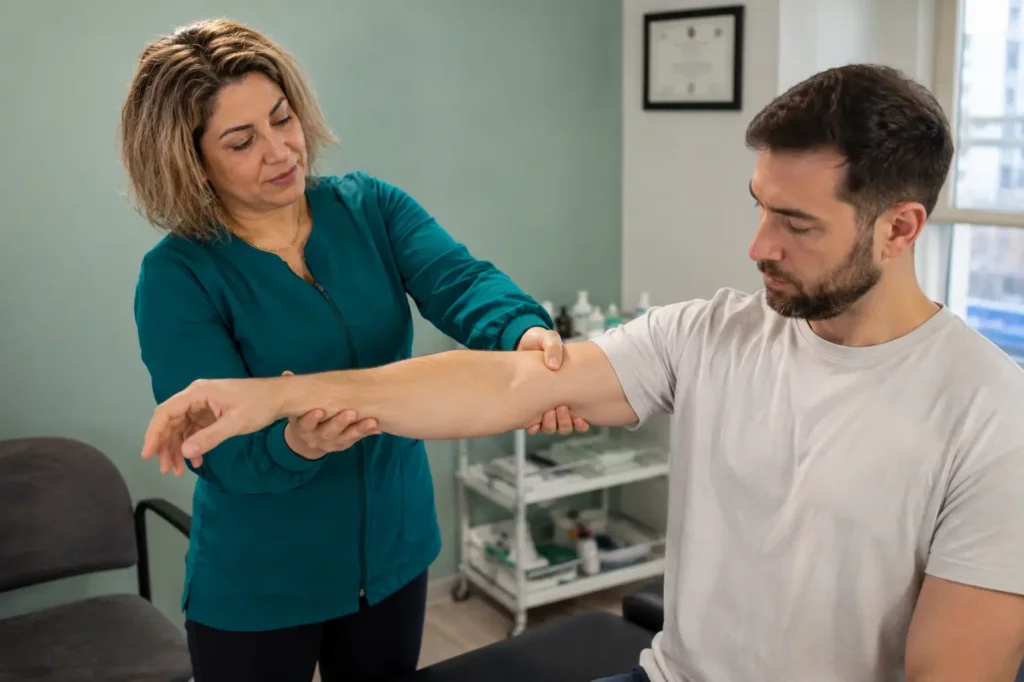
Every shoulder is different. That is why our shoulder physiotherapy programs never use a one-size-fits-all approach. Your treatment plan starts with a thorough assessment and is built around your specific injury, your pain level, and your recovery goals.
Your Treatment May Include:
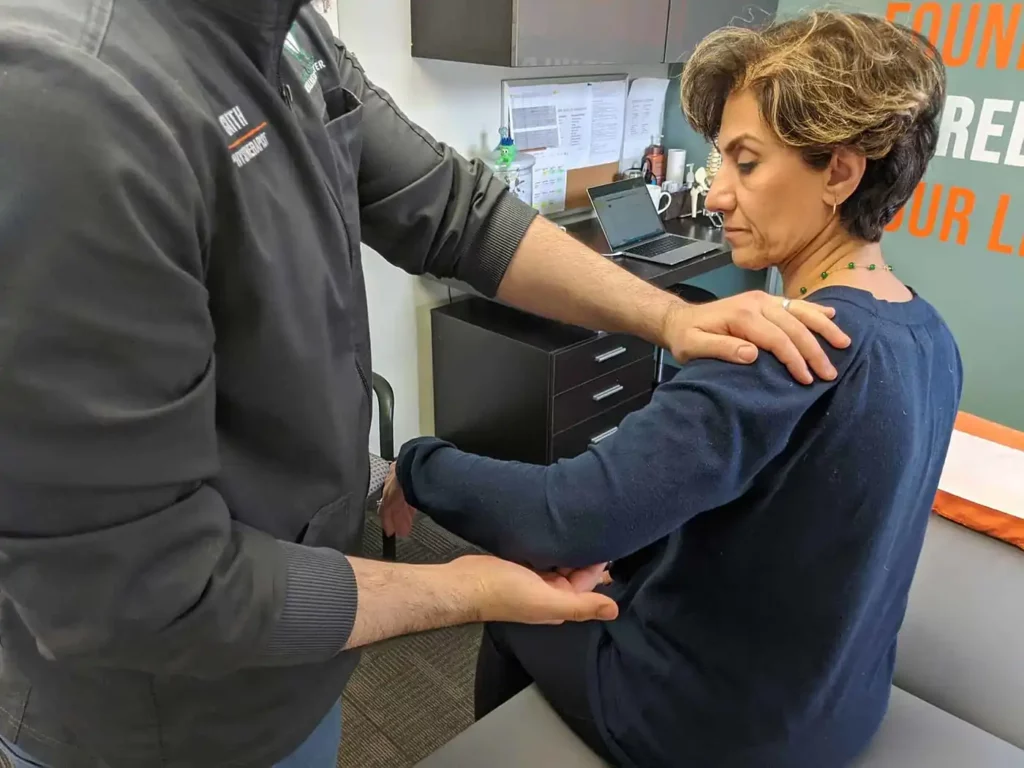
Manual Therapy and Joint Mobilization
Targeted Exercise Programs
Strengthening exercises designed to rebuild the muscles that support your shoulder — especially the rotator cuff and scapular stabilizers.
Focused acoustic waves applied to the affected tendon. Often used for longer-standing rotator cuff problems.
Targets deep muscle tension, trigger points, and nerve-related pain that contributes to shoulder dysfunction.
Specialized instrument-assisted therapy for chronic tightness and limited joint mobility.
Spinal and shoulder joint adjustments to restore alignment and reduce nerve irritation that can refer pain to the shoulder.
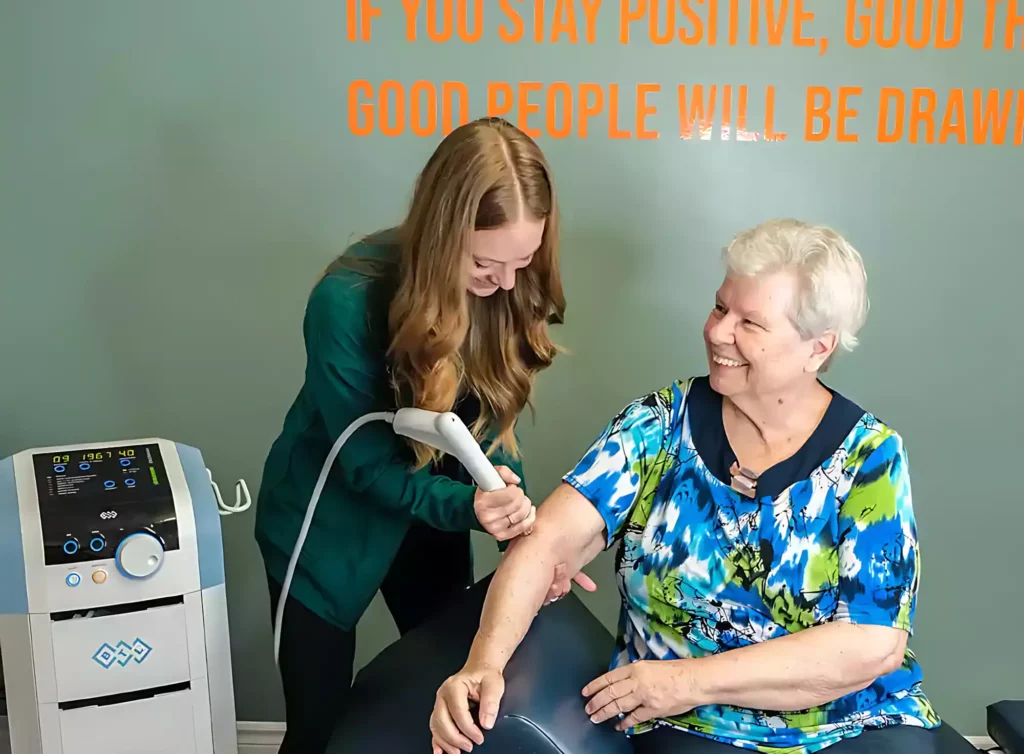
TECAR uses radiofrequency energy to create warmth deep in the tissue, which increases blood flow and helps muscles relax. We use it alongside manual therapy and exercise for shoulder problems including frozen shoulder, and for post-surgical rehab once your surgeon has cleared you.
We use the Winback Back 1S, a Class II medical device licensed by Health Canada (licence 109716).
Why Ottawa Patients Choose Kent Chiro-Med for Shoulder Physiotherapy
You have options for shoulder pain treatment in Ottawa. Here is why our patients stay with us:
- 30-minute one-on-one sessions: Your practitioner spends the full appointment with you. No assistants. No handoffs. No rushed 10-minute visits.
- Private treatment rooms: Your session happens in a private room — not an open gym where everyone can hear your conversation and watch your treatment.
- Practitioners who see a lot of shoulders: Dr. Maryam works extensively with shoulder problems and TMJ. Ghaith, our physiotherapist, focuses on sports-related shoulder and knee rehabilitation.
- Both chiropractic and physio under one roof: You can maximize both your chiropractic and physiotherapy insurance benefits without visiting multiple clinics.
- 5.0 Google rating from 818 reviews: We do not just claim to be good. Our patients confirm it — consistently, across Google and Facebook.
Case Notes from Our Clinic
Rotator Cuff Injury
A man in his mid-forties came in with a partial rotator cuff tear after a fall during a recreational hockey game. He could not lift his arm past 90 degrees, and sleeping on that side was impossible.
After assessment, his plan combined chiropractic care with physiotherapy focused on progressive rotator cuff strengthening, alongside shockwave therapy and TECAR.
Over about eight weeks of treatment he regained overhead range of motion and returned to the gym. At twelve weeks he was back to recreational hockey.
Frozen Shoulder
A woman in her early fifties came in with frozen shoulder that had developed gradually over several months. She could barely reach behind her back, and brushing her hair was painful.
Her plan included gentle joint mobilisations to work on range of motion, TECAR, and a daily home exercise program — nothing extreme, just consistent mobility work.
She reported meaningful improvement in overhead reach at around six weeks. By fourteen weeks her range of motion had improved substantially and she reported no pain during daily activities. She continues with maintenance exercises at home.
These are individual patient experiences. Results are not typical and will not be the same for everyone. What treatment suits you depends on your assessment.
Trusted by people like you
How Long Shoulder Problems Usually Take to Settle
People always ask how long this will take. These are general ranges reported for these conditions — not a timeline for your shoulder, and not a promise about our treatment. They vary a lot with severity, your general health, and how consistently you do your home exercises. We will tell you what we are seeing as we reassess.
| Condition | Mild/Moderate | Severe |
|---|---|---|
| Rotator Cuff Strain | 4–8 weeks | 12–16 weeks |
| Rotator Cuff Tear (partial) | 8–12 weeks | 16–24 weeks |
| Frozen Shoulder | 8–14 weeks | 16–24+ weeks |
| Impingement | 3–6 weeks | 8–12 weeks |
| Tendinitis/Bursitis | 2–4 weeks | 6–8 weeks |
| Post-Surgical Rehab | 8–12 weeks | 16–24+ weeks |
Frequently Asked Questions About Shoulder Physiotherapy
Shoulder pain can come from many sources. The most common causes we see in our Ottawa clinic include rotator cuff injuries, frozen shoulder, impingement syndrome, tendinitis, bursitis, and posture-related strain from desk work. Sometimes the pain originates in the neck or upper back and refers into the shoulder. That is why a proper assessment is so important — the location of your pain does not always tell the full story.
Both can help, and at Kent Chiro-Med, you do not have to choose one or the other. Chiropractic care works on joint movement and the surrounding soft tissue. Shoulder physiotherapy rebuilds strength, and works on range of motion. For many shoulder problems, both have a role. Your assessment decides. Our team assesses your condition and recommends the right shoulder pain treatment path — or a combined approach.
It depends on the condition and on you. There’s a table further up this page with the general ranges reported for common shoulder problems — those are a guide, not a prediction for your shoulder. After your assessment we’ll tell you what we’re seeing and reassess as you go.
No. You can book directly with our clinic. No referral is needed to see a chiropractor or physiotherapist in Ontario. If your condition requires imaging (like an X-ray or MRI), our practitioners can arrange that for you.
Most extended health plans cover chiropractic care and physiotherapy, though coverage varies by plan. Check your insurance coverage before your visit — our team can explain payment and receipt arrangements for your service.
TECAR uses radiofrequency energy to create warmth deep in the tissue. We use it alongside hands-on treatment and exercise, not on its own. A randomised trial reported better pain and function scores when TECAR was added to usual care for frozen shoulder. Whether it suits your shoulder depends on your assessment.
Yes. We offer evening appointments during the week and Saturday availability. You can book online anytime through our website, or call us at 613-695-8600.
Ready to Start Your Shoulder Physiotherapy?
You do not have to live with shoulder pain. And you do not have to figure out the right shoulder pain treatment on your own.
Book a free 15-minute consultation at our downtown Ottawa clinic. We will assess your shoulder, answer your questions, and tell you exactly what we recommend — with no pressure and no obligation.
- Book Your Free Consultation Online
- Call us: 613-695-8600