





- Class II medical device
- Health Canada licensed
TECAR Therapy in Ottawa
- Included in your treatment fee. Not billed as a separate add-on.
- Takes 10 to 12 minutes, inside your regular appointment.
- Feels like gentle, deep warmth. Most people find it comfortable.


Associated With
COMMONLY USED FOR
- Low back pain
- Neck and upper back tension
- Shoulder pain and frozen shoulder
- Plantar fasciitis
- Knee osteoarthritis
- Muscle tightness
- Chronic musculoskeletal pain
- Post-surgical rehab
- Some disc-related pain, after assessment
What is TECAR Therapy?
TECAR stands for Transfer of Energy Capacitive and Resistive. It is a form of radiofrequency therapy. A handheld applicator passes high-frequency energy through the tissue, which creates warmth deep below the skin where a heat pack cannot reach.
Nothing breaks the skin and there are no needles or medication. Most people describe it as a comfortable warming feeling.
We use the Winback Back 1S. It is licensed by Health Canada as a Class II medical device, licence number 109716. Our physiotherapists and chiropractors have completed the manufacturer’s training on it.
TECAR is not a treatment on its own. We use it as one part of a plan that also includes hands-on treatment and exercise, and only when our assessment says it fits your situation.
See how TECAR therapy works
16 seconds • TECAR therapy at Kent Chiro-Med
That is what the assessment is for.
What TECAR does in the tissue
The energy raises the temperature of the tissue under the applicator. That warmth is what drives the effects below.
- Increases blood flow to the area being treated
- Helps muscles relax and reduces guarding
- May help reduce pain and improve comfort during and after treatment
- Makes tissue more willing to move, so hands-on work and stretching go further
- Supports circulation and drainage around the treated area
What a TECAR session is like
TECAR happens inside your normal appointment, not as a separate visit.
Your therapist applies a small amount of conductive cream, then moves a handheld applicator over the area. You will feel warmth building gradually. You can tell your therapist at any point if it feels too warm, and they will turn it down.
The TECAR part usually takes 10 to 12 minutes. The rest of your appointment carries on as usual, with hands-on treatment and exercise.
Afterward the skin may look slightly pink and feel warm for a while. There is no downtime. In most cases you can go straight back to your day, and your therapist will tell you if anything should be different for you.
Where we use TECAR
How we use TECAR depends on what the assessment finds. These are the three areas it comes up most.
Pain and rehabilitation
We may use TECAR for low back pain, neck and upper back tension, shoulder problems including frozen shoulder, plantar fasciitis, knee osteoarthritis, and longer-standing muscle and joint pain.
For some disc-related pain we use it as part of a wider plan, alongside assessment and active rehab, rather than on its own.
Sports injuries and recovery
For athletes and active people, we may use TECAR to help settle muscle tightness and soreness so you can get back to training and loading the area properly.
Recovery still depends on the injury and on the work you put into your rehab. TECAR supports that work, it does not replace it.
Post-surgical rehabilitation
Once your surgeon has cleared you and we have assessed you, TECAR can often be introduced early in your recovery to help with comfort and movement.
When we start it, and how, depends on your procedure, how the tissue is healing, and how you are doing.
When TECAR is not the right choice
TECAR is not for everyone. Before we use it, we go through your medical history and check for anything that would make it unsuitable.
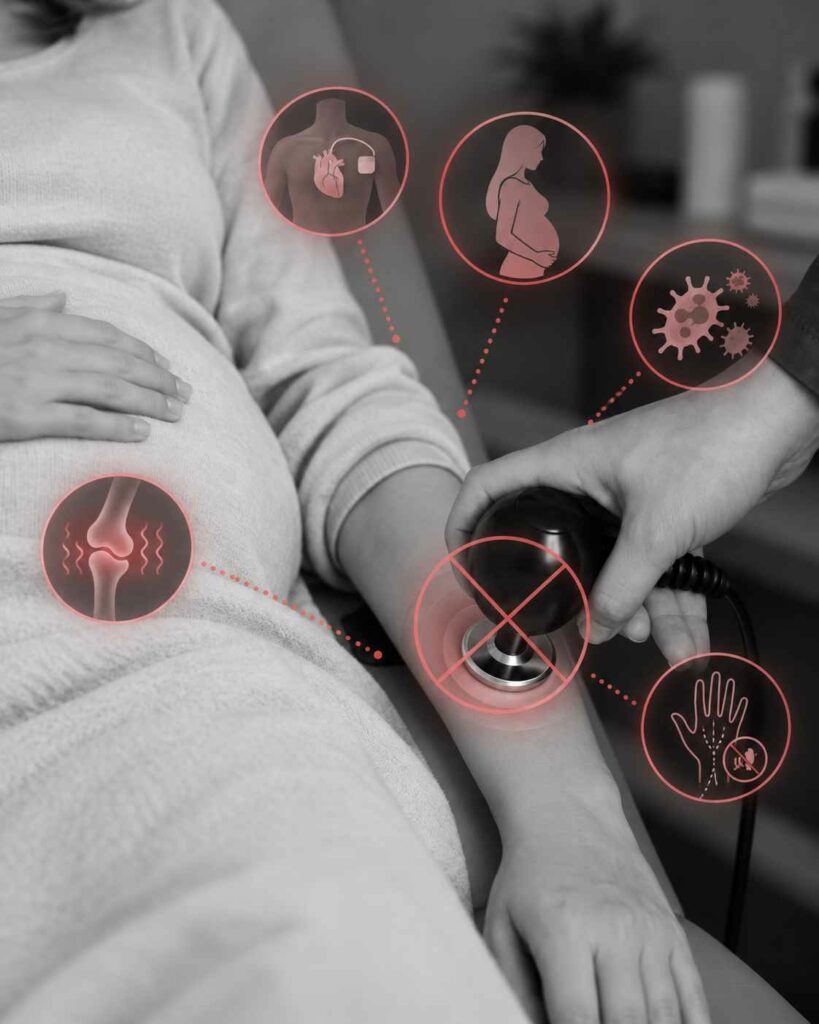
We will not use TECAR, or we will look at it carefully first, if any of these apply to you:
- You have an implanted electronic device, such as a pacemaker or defibrillator
- You are pregnant
- You have an active infection
- You have significant acute inflammation in the area
- You have reduced or altered sensation in the area, so you cannot reliably feel heat
We also follow the manufacturer’s own safety guidance, which can differ depending on the setting and the part of the body being treated.
If TECAR is not suitable for you, that does not mean we cannot help. It means we will use something else from our range of treatments.
How TECAR works with our other treatments
TECAR is often used in the same appointment as the hands-on and tool-assisted treatments we already offer.
Myofascial release / trigger point therapy
Warming the tissue first can make deeper soft tissue work more comfortable to receive.
Acupuncture / Dry needling / Electro-acupuncture
Pairs easily with needle-based treatment in the same session.
Chiropractic adjustments / Mulligan techniques
Relaxing the surrounding muscles beforehand may make the adjustment easier to perform and tolerate.
Graston technique / Shockwave therapy
Often used in the same session as instrument-assisted soft tissue work.
Mechanical decompression
Used alongside decompression as part of a wider plan for some back presentations.
Dry cupping
Both work on circulation in the treated area and combine comfortably.
PNF / MET stretching
Warmer tissue tends to move further, so stretching in the same session can be more productive.
Neuro Kinetic Therapy, SFMA, FMS
Improving comfort and mobility first can make functional movement work easier to do well.
What the research says
TECAR is a newer treatment and the research on it is still building. We would rather tell you that than overstate it.
A clinical commentary published in the International Journal of Sports Physical Therapy in 2025 reviewed the existing studies. One of its co-authors is a physiotherapy leader at Johns Hopkins Hospital.
Randomised trials have reported better pain and function scores when TECAR was added to usual care for frozen shoulder and for plantar fasciitis.
That is why we treat TECAR as a useful addition to a plan rather than a treatment we apply to everyone.
What patients have said
1:21 • A patient of Ghaith Dhaidan, PT, describes their experience
These are individual patient experiences. Results are not typical and will not be the same for everyone. What treatment suits you depends on your assessment.
Case Notes from our Clinic
These are real cases from our clinic, with details changed so no one can be identified. They show how TECAR fits into a plan. They are not a guide to what will happen for you.
Case 1
A woman in her mid-forties partially tore her ACL playing soccer. She was referred for imaging and a surgical consult, and began physiotherapy while she waited. Her program included manual therapy, TECAR, and a graded strengthening progression. Over the following weeks she reported less knee pain and better range of motion, moved off crutches, and returned to walking normally and to loaded exercise under supervision.
Case 2
A patient came in with low back pain and sciatica, standing in a protective, bent posture. Their plan combined chiropractic care, mechanical decompression, acupuncture, and TECAR. TECAR was used to reduce muscle guarding and improve comfort so they could tolerate the hands-on and active parts of the plan. Over the course of care they straightened up, reported less leg pain, and returned to more normal daily movement.
Individual results vary.
Trusted by people like you
What to expect at Kent Chiro-Med
- Assessment first. We work out what is driving your problem before we decide whether TECAR has a role.
- No extra charge. TECAR is included in your regular treatment fee when it is clinically indicated. It is not billed as an add-on. Full pricing is on our price list.
- A licensed device, used by trained clinicians. The Winback Back 1S is a Class II medical device licensed by Health Canada, licence 109716. It is applied by our registered physiotherapists and chiropractors.
- Part of a plan, not the whole plan. TECAR sits alongside hands-on treatment and exercise, which is what drives your recovery.
If you are dealing with pain that is not settling, book an assessment. We will tell you what we find, what we would suggest, and whether TECAR is part of it.
Before You Book
Frequently Asked Questions
Real questions we hear at the clinic — answered clearly, so you know what to expect.
What is TECAR therapy?
TECAR stands for Transfer of Energy Capacitive and Resistive. It is a radiofrequency treatment that creates warmth deep in the tissue using a handheld applicator. Nothing breaks the skin.
How does it work?
The energy warms the tissue under the applicator. That warmth increases blood flow, helps muscles relax, and makes tissue more willing to move, which can make hands-on treatment and exercise more productive.
What device do you use?
The Winback Back 1S. It is licensed by Health Canada as a Class II medical device, licence number 109716.
What do you use TECAR for?
Most often low back pain, neck and upper back tension, shoulder problems including frozen shoulder, plantar fasciitis, knee osteoarthritis, muscle tightness, longer-standing musculoskeletal pain, and post-surgical rehab. For some disc-related pain we use it as part of a wider plan. Whether it suits your problem depends on your assessment.
Does it hurt?
No. Most people describe a comfortable warming or gentle deep-heating feeling. Tell your therapist if it feels too warm and they will lower it.
How long is a session?
The TECAR part usually takes 10 to 12 minutes and happens inside your regular appointment.
How many sessions will I need?
The number of sessions is individualised according to the condition and your response, and is reassessed as treatment progresses.
Does TECAR cost extra?
No. TECAR is included in your regular treatment fee when it is clinically indicated. It is not billed as a separate add-on.
Are there side effects or risks?
The area may look slightly pink and feel warm for a while afterward. That settles on its own. Because the treatment produces heat, it is not suitable for everyone, which is why we screen before using it.
Who should not have TECAR?
We will not use it, or will assess carefully first, if you have an implanted electronic device such as a pacemaker or defibrillator, if you are pregnant, if you have an active infection, if there is significant acute inflammation in the area, or if sensation in the area is reduced. We also follow the manufacturer’s safety guidance.
Can I have TECAR after surgery?
Often yes, once your surgeon has cleared you and we have assessed you. TECAR can sometimes be introduced early in the post-operative period. When we start it depends on your procedure, the stage of tissue healing, and how you are presenting.
Is TECAR safe if I have had a fracture?
A fracture does not automatically rule out TECAR. Depending on the injury, it may be used around a healing fracture to support soft tissue and circulation. Whether it suits you, and at what stage, depends on the fracture, any surgical hardware present, and where you are in healing. Your practitioner will decide after assessing you.
Can I exercise after a session?
Usually yes, and in most cases exercise is part of the same appointment. Your therapist will tell you if anything should be different for you.
How does TECAR help with range of motion?
Warmer tissue tends to move further and muscles guard less, so stretching, mobilisation and exercise in the same session can achieve more.
Still have a question?
The clearest next step is a proper assessment.