- Published on:
- Updated on: June 22, 2026
Rock Climbing Ottawa: Top 8 Destination and Gyms to Practice Climbing
Your 2025 Guide To Finding The Best Rock Climbing In Ottawa

Being a physiotherapist with years of experience helping people recover from injuries, I have realized the benefits of engaging in sports. Sports challenge the mind as well as the body. Rock climbing is a rewarding activity for fitness enthusiasts, like tennis, kickboxing, and martial arts.
It is a complete workout that improves strength, endurance, balance and mental focus.
Our team of healthcare experts has looked into several rock-climbing places in Ottawa. We visited indoor gyms as well as outdoor places to find out their pros and cons. If you find rock climbing outdoors more challenging, skip the first 3 gyms from this list and check out the last three options.
It is also to be noted that each type of rock climbing has its own health and fitness benefits. We have briefly explained each of these types of climbing along with the best place to practice them.
This list also contains a few spots from around Ottawa. We noticed that Ottawans like to visit them for one-day trip to enjoy rock climbing, hiking and other fun activities.
Choose the best rock climbing place according to your interest and health goals from the list mentioned below. Whether you are an experienced climber or a beginner, these climbing destinations can make you feel invigorated and inspired.

Contact Info
Address: 1737B St Laurent Boulevard Ottawa, ON K1G 3V4
Contact Number: (613) 216-4640
Email: [email protected]
Hours
Monday-Friday 11 AM – 11 PM
Saturday-Sunday 11 PM – 9 PM
What is Bouldering?
In this type of rock climbing, the climbers do not use ropes or harnesses. They use climbing shoes and a bag of chalk over safety mats to climb short but tricky rocks. This challenging climb is a test of your balance, technique, strength and problem-solving.
Climbers climb over large natural boulders or artificial boulders. This type of climbing can also be done at the base of larger rock faces.
What did we like about this place?
When we visited this gym, we noticed that the training program was quite fun. A large area is purely dedicated to bouldering, and the gym has climbers with mixed abilities working at their own pace. The environment is positive, and coaches are encouraging and non-judgmental. We also liked that route setting is frequent, with new boulder problems and rope routes posted regularly, and that a Kilter Board and spray wall are available for focused training.
Facilities
- Approx. 17,000 sq ft of climbing surface (bouldering + rope)
- Five dedicated bouldering areas
- Top-rope and lead walls (to ~24 ft for rope; boulders ~12–14 ft)
- Kilter Board, campus boards, system wall, hangboards
- Cardio and strength area (treadmill, bike, free weights, etc.)
- Regular route resets across bouldering and rope areas
Fees
- Day pass: $20
- Rentals:
- Shoe: $5
- Harness: $5
- Liquid Chalk: $2
- Courses: Lead course $110 (lead test $10).
- Memberships/punch passes:
- 1 Month Membership: $60 per month. Minimum two months, with a startup fee of $20.
- 3 Month Membership $275
- 6 Month Membership: $451
- 12 Month Membership: $660
- Taxes: Coyote notes some program prices include taxes; day-use tax policy not specified on site.
Programs and Courses
- Adult Climbing Course for Beginners
It is for beginners and new climbers. During this Program, they usually climb to a height of 5.8 ft or under. The participants of this Program learn all the basic movements, techniques, and terminology with an emphasis on safety.
- Intermediate Adult Climbing Course
This program is specifically designed for the people who climb at the height of 5.9 to 5.11 for routes at red or blue bouldering levels. It helps the climbers to learn advanced techniques with a special focus on fitness, flexibility, and injury prevention.
- Advanced Adult Climbing Course
It is especially for those who have taken the intermediate course. The participants of this course climb at the heights of 5.11 or higher and are bouldering in teals.
- Lead Climbing Course
This course is beneficial for the lead climbers, and it is quite challenging.
- Youth Climbing Course sessions
This Program includes personalized one on one sessions with expert coaches and group sessions with an emphasis on drill, technique and activity.
- Youth Competitive Team
This Program is specifically for the best young climbers polishing their climbing skills so that they can compete at regional, national, and international levels.
- Summer Camps ( ages 7–14)
Summer camp is a great opportunity for your kids. There are lots of fun games and challenges all related to climbing.
Pros
- Friendly staff
- Positive environment
- Strong training tools (Kilter Board, campus boards)
Cons
- None
Contact Info
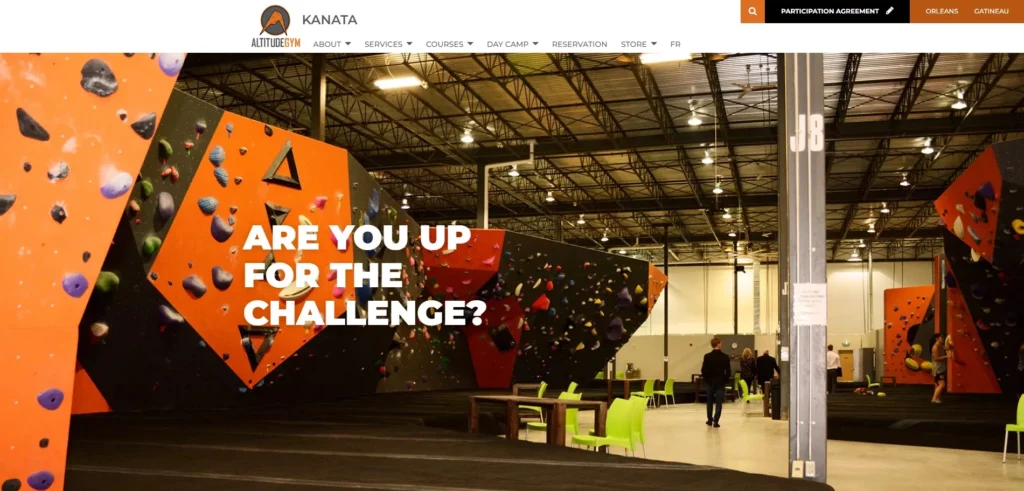
Address: 501 Palladium Dr #0E5, Kanata, ON K2V 0E5
Contact Number: (613) 903-5989
Email: [email protected]
Hours
Monday-Friday 9 AM – 11 PM
Saturday-Sunday 9 PM – 10 PM
What is top rope climbing?
In top rope climbing or top roping, a rope is used for the safety of the climbers. The rope is tied from a belayer at the bottom end of the route. It is also connected with an anchor system at the top. The climber is attached to the rope by means of a harness. This technique helps rock climbers in climbing the most difficult routes.
What did we like about this place?
On our visit to this gym, we found the place was perfect for rope climbing. There were specifically designed boulders with ropes and anchors for beginners. The motivating staff was constantly encouraging the beginners to do their best.
An auto belay is a great climbing tool during the initial climbing days as it calmly lowers you down. The gym has a specifically designed area for the whole family with activities such as a ninja warrior obstacle course, and augmented reality climbing wall, so just don’t miss this opportunity and visit the altitude gym with your friends and family members.
Facilities
- Rope walls (top-rope and lead), auto-belays
- Bouldering areas
- Family zone (The Quarry), AR climbing wall
- Ninja Warrior obstacle course
- Café/bistro and pro shop
- Route-setting program published on site (frequent rotation)
Fees
- Day rates: Adult $21.50, Student $18.50, 12 & under $15.50
- All-included package (entry+shoes+harness): Adult $31.50, Student $28.50, 12 & under $27.00
- Memberships: 1 mo $105; 3 mo $280; 12 mo $840; month-to-month $76/mo (+$55 admin on activation).
- Punch card: 10 entries $200.
- Rentals: Shoes $7; harness $6.50; belay/rope $6.50 each.
- Courses: Belay cert $10; Lead cert $15; top-rope course $55; lead course (6h) $175.
- Taxes: +HST (taxes not included in prices).
Programs and Courses
Recreational courses
Level 1 = This course is an introduction to rock climbing. It is for beginners, teaching them basic techniques, games and exercises to build confidence.
Level 2 = This course is for intermediate youth or youth with relevant experience, once a week, further improving the climbing skills of the participants through practice and more advanced and intense technical lessons. This can become the basis for competitive programs.
Adults 18 years and older
Progression Level = This course is specifically designed for all those who have very little climbing experience but they are very enthusiastic about exploring new horizons.
- The Altitude Gym Climbing Team – This Program aims to take motivated and enthusiastic climbing athletes to the next level with the aim of improving performance. They are given specific technical and physical training along with some exercises.
- Ninja Recreational Courses – These courses are for 7-14-year-old children.
Pros
- Full rope offering with auto-belays
- Family-friendly features and long hours
Cons
- Peak times can be busy; consider off-peak hours.

Contact Info
Address: 265 City Centre Ave, Ottawa, ON K1R 7R7
Contact Number: (613) 569-0131
Email: [email protected]
Hours
Monday-Saturday 7 AM – 11 PM
Sunday 7 PM – 10 PM
What did we like about this place?
A modern bouldering-first space integrated with a full fitness centre, studio, and café in a convenient central location at City Centre. The vibe is community-oriented, with an emphasis on approachable sessions, good coffee/food, and a layout that makes it easy to alternate between climbing and training.
Facilities
- Indoor bouldering throughout (rope climbing not listed)
- Fitness area and studio space on site
- Café in the lobby area
- Training boards/walls
- Route rotation cadence
Fees
- Day passes: Adult Climb (14+) $20; Adult Fitness (14+) $17; Youth (9–13) $17; Child (5–9) $15
- Punch passes (10): Adult Climb $180; Adult Fitness $155; Youth (9–13) $155; Child (5–8) $135
- Fitness memberships (no bouldering): 1-Month $75; 1-Month Recurring $70; 3-Months $205; 6-Months $385
- Rentals (shoes/chalk, etc.): Not specified by source
- Taxes: +HST where applicable (site lists prices before tax).
Programs and Courses
- Fitness classes & programs offered through the studio/fitness side (booking details vary by program)
- Climbing classes/intro and youth team details
Pros
- Central location with long daily hours and on-site café
- Straightforward day-pass and punch-pass pricing.
Cons
- Rental pricing and specific training boards not listed online; call the front desk if you need details.
From diagnosis to treatment and rehabilitation, we're here to support you every step of the way.

D.C
Contact Info
Address: National Capital Commission office
33 Scott Road, Chelsea, Quebec J9B 1R5
Contact Number: (819) 827-2020 or (866) 456-3016 (toll-free)
Emergency line (24-hour): (613)239-5353
Email: [email protected]
Gatineau Park, just minutes from downtown Ottawa, transforms into an ice climbing destination during winter months. The park’s frozen waterfalls and ice formations provide natural climbing opportunities.
What is Ice Climbing?
Ice climbing is one of the most challenging types of climbing. Climbers spend hours clinging to a frozen waterfall or a glacier. They use a variety of equipment to inch their way to the top. Ice climbing can be violent too. Climbers swing metal tools into ice, which often leads to chunks of ice flying at your face or down below on top of your partner. Levels of difficulty range from relaxed climbs to extremely dangerous ascents.
Specialized equipment used by the climbers includes double ice axes, modern ice tools, rigid crampons, boots, socks and very warm clothing.
What did we like about this place?
It is the second most visited park in Canada. It is the capital’s best conservation park, with lots of attractions and activities for visitors.
It is widely known as the best place for ice climbing for climbers of all skill levels. The park has an impressive array of waterfalls, ice walls and steep cliffs to provide an unforgettable experience. Its unique geographic features and weather during winters make it an ideal destination for enthusiasts.
The park has other recreational facilities, too, which include mountain biking, skiing, camping, picnic, and horseback riding. This means that you can have great fun.
Facilities
- Rock climbing
- Ice climbing
- Non-motorized boats
- Road bikes and mountain bikes
- Four-wheeled scooters
- Cross-country skis, snow shoes and fat bikes
- Camping
- Overnight accommodations
- Picnic facility
- Swimming
- Hiking and walking
- Horseback riding
- Boating
- Cycling
- Skating
- Fishing
Season
- Ice climbing: January-March (weather dependent)
- Rock climbing: Spring-Fall
Pros
- Excellent environment
- It has well-maintained hiking paths and easily accessible washrooms
- All the rock climbing equipment is available for rent
Cons
- Due to the remoteness of the climbing location, it is very difficult to communicate with the emergency services
- In case of assistance, the rescue services take a lot of time to reach this location.
Info
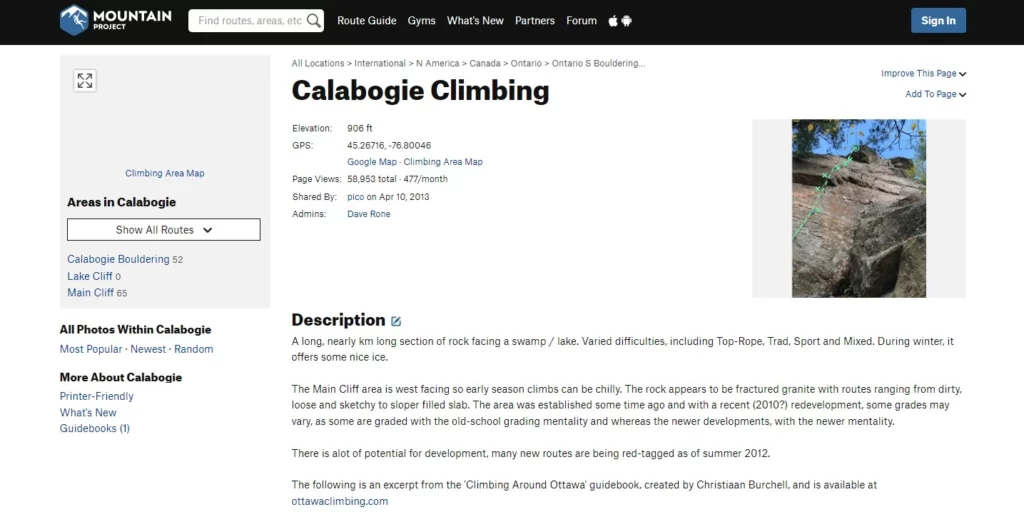
GPS Coordinates: 45.26716, -76.80046
What is trad climbing?
Traditional climbing, or Trad climbing, is a type of rock climbing in which the lead climber places the safety equipment while climbing on the route. After the lead climber completes a route, the second climber or belayer removes the protection equipment as he climbs. Traditional climbing differs from sport climbing, where the protection equipment is pre-drilled into the rock in the form of bolts. Trad climbing is considered a risky sport too.
What did we like about this place?
There are several cliffs located close to Calabogie Peaks Ski Resort. Most people like to climb on the main cliff. The area has granitic gneiss and decent rock.
It has a beautiful forest setting with flat landings. The place has a beautiful rest and refreshment area for climbers, along with other entertainment facilities.
Facilities
- Good rock, flat landings, and a beautiful forest setting
- Otter Pond is the most popular of Calabogie’s bouldering areas.
- 150 established problems, mostly in the easy to moderate range.
- The Eagles Nest is a beautiful hiking spot to watch the sunset.
- Barnet Park on Calabogie Lake offers swimming, fishing, and picnic tables for your post-climbing cookout.
- A grocery store
- A number of restaurants include the Calabogie Brewing Company. Neat Cafe, in Burnstown, is a popular stop for the climbers.
- Live music sessions
Rock Climbing Options
- A long section of rock faces the lake, which is a nice place for climbing with varied difficulties
- Toprope
- Trad
- Ice climbing in the winter season
Pros
- A great place for beginners to start.
- It is easier to climb solo or with a single pad.
Cons
- None.

Contact Info
Address: Val-Morin, Quebec J0T 2R0, Canada
Contact Number: (819) 322-2834
What is Multi-Pitch
Multi-pitch climbing is a type of rock climbing that typically takes place on routes that are more than a single rope length ( 50 to 70 meters) in height. The lead climber cannot complete the climb as a single pitch. The number of pitches is required to complete the rote. The following are the steps involved in multi-pitch climbing.
- The climbers start climbing at the base of the rockface and establish a belay station with the help of safety equipment. The leader begins climbing the first pitch and places protective gear like bolts on the way. He also attaches the rope to it to prevent a long fall or slip.
- Once the leader reaches the top of the first pitch, he builds an anchor system to belay the second climber. The second climber starts climbing up, and as he ascends, he removes the protective bolts along the way. The second climber joins the leader at the belay station. They repeat the process to climb more pitches.
What did we like about this place?
This place is ideal for those who want to climb through multiple wall routes. It is a multi-pitch land with three different Monts and multiple sectors. The Reg Park offers more than 500 wall routes and many possibilities for bouldering. The best thing about this place is that people of all skill levels can practice climbing here. Choose a sector of the mountain according to your level of difficulty and skill level.
Facilities and Resources
- 50-70 meters long rope
- Quickdraws
- Carabiners
- Rock climbers
- Jammers
- Harness
- Crash pad.
- Mountain bike
- Hiking
- Family activities
- Nature watching
- Cross country skiing
Price
Visit the website for online tickets
- Adult: $14
- FQME member: $12
- 17 years and – & 80 years and +: Free
- Residents: Free
Programs
- The programs here at Regional Park include top-roping, sports routes for all levels, along with multi-pitches
- The regional park has three main rock climbing areas, which include Monts Césaire, Condor and King. They are further divided into twenty subsectors.
- The most popular initiation walls program is at Chico and Dizzy sectors at Mont Césaire.
- Most of the rock courses are rated 5.9 or less and are mainly climbed on cams or top ropes.
- Champs-Élysées (Mont Césaire), L’Aiguille and La Bleue (Mont Condor) are the rock climbing areas for intermediate and advanced climbers.
- Dame de Coeur and Gemini sectors are the best areas for sports climbing.
- Mont King is famous for High-flying adventures.
Pros
- Amazing atmosphere
- Very economical packages
Cons
- None.
From diagnosis to treatment and rehabilitation, we're here to support you every step of the way.

PT, M.Sc.PT
Info
Location: 45.182413,-76.858272
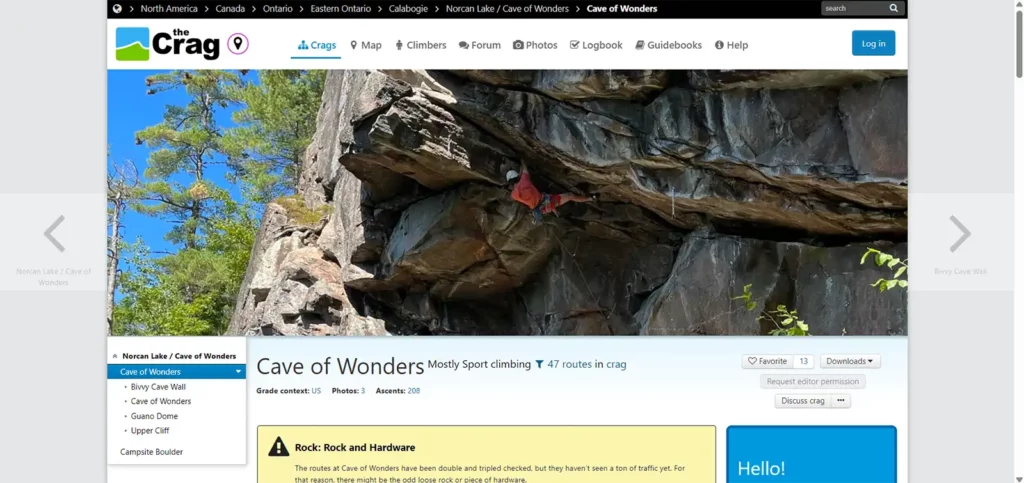
Not far from Ottawa and near Calabogie, Ontario. More specifically it’s accessed from Norcan Lake. The only way to reach Cave of Wonders is by boat (canoe, kayak, or paddleboard).
Why Cave of Wonders
Ontario’s Cave of Wonders offers a unique and challenging climbing experience. This impressive climbing location is known for its concentration of excellent sport climbs and its unique feature: the first bolted granite roof in Ontario.
What did we like about this place?
There are several reasons why the Cave of Wonders is such a well-regarded destination. To begin with, the experience of getting there, often described as a ‘magic carpet ride’, is an adventure quite worthwhile in itself. Once you arrive, the sheer beauty of the cave is captivating; it’s a vast, blocky cavern stretching 40 feet from floor to ceiling and 100 feet across, creating a spectacular natural setting. Furthermore, there’s a profound respect for the hard graft put in by the development team, who dedicated significant effort to cleaning and bolting the routes, making climbing possible here. This shared endeavour has also fostered a strong sense of community amongst those who have helped bring this incredible climbing spot to life.
Facilities and Resources
- Over 30 bolted routes.
- Access trail.
- Community stick clip in the Bivvy Cave.
Fees
Not explicitly mentioned, but it’s on Crown Land, suggesting no specific fees to access the area itself. Donations to Ottawa Crag Care are encouraged to support route development.
Pros
- Variety of climbing routes.
- Unique cave environment.
- Developed by a dedicated team of climbers.
- Relatively stable access due to being on Crown Land.
Cons
- Remote access requires a boat (canoe, kayak, or paddleboard).
- Some routes may still have loose rock or hardware.
- Limited facilities.
- Carry a wrench to tighten loose bolts.
- Consider the logistics of a rescue due to the remote location.
Info
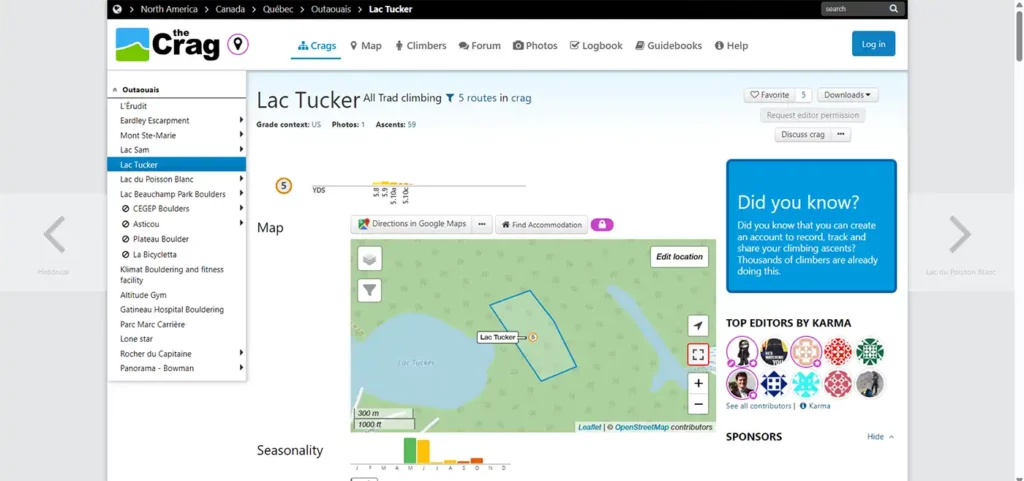
Location: 45°55’48.0″N 75°48’31.0″W
Why Lac Tucker
Nestled in a beautiful setting, Lac Tucker offers a serene escape for climbers seeking moderate trad and multi-pitch adventures. While perhaps not the largest climbing destination, its unique charm and well-regarded routes make it a noteworthy spot for those in the know.
What did we like about this place?
The main draw for us here is the simply cracking, tranquil atmosphere it offers for climbing. It’s not often you find somewhere with such peaceful surroundings where you can truly focus on the climb without feeling rushed or overwhelmed. The quietude allows for a proper, mindful experience on the rock, making every ascent feel that much more rewarding.
Facilities and Resources
- Bolted anchors.
- Backcountry access
- Informal parking/trail
Fees
Not explicitly mentioned; likely free as it is an outdoor climbing area.
Pros
- Good for moderate trad and multi-pitch climbing.
- The peaceful setting enhances the overall climbing experience.
Cons
- Smaller size, can be crowded on weekends.
- Access road (Chemin de la Solitude) may be washed out, adding to the approach.
Ottawa offers a vibrant rock climbing scene with exceptional indoor and outdoor rock climbing spots. These places cater to the climbers of all skill levels. Whether you are a beginner or an experienced climber, these places offer something for everyone. Choose your favourite rock climbing place from the list above, head out to our recommended spot, and achieve your fitness goals along with the fun.
Clinic Insight: Common Rock Climbing Injuries
Climbing builds serious strength, but it also loads the same joints over and over — fingers, wrists, elbows, shoulders, and neck. Most climbers who come into our downtown Ottawa clinic were progressing well, then one area started to complain. The pain was easy to ignore at first, so they kept climbing. A few sessions later, it was harder to push through. Here are the patterns we see most often in Ottawa climbers, and what each one usually points to.

Shoulder strain and rotator cuff irritation
Overhead reaches, lock-offs, and dynamic moves put big demands on the shoulder. Pain here often points to the rotator cuff or to how the shoulder blade controls the joint. It may feel like a pinch at full reach, or an ache that lingers after a long session. An assessment can look at how the shoulder moves under load and what may be adding strain. Learn more: Shoulder Physiotherapy and Rotator Cuff Treatment.
Wrist and elbow overload
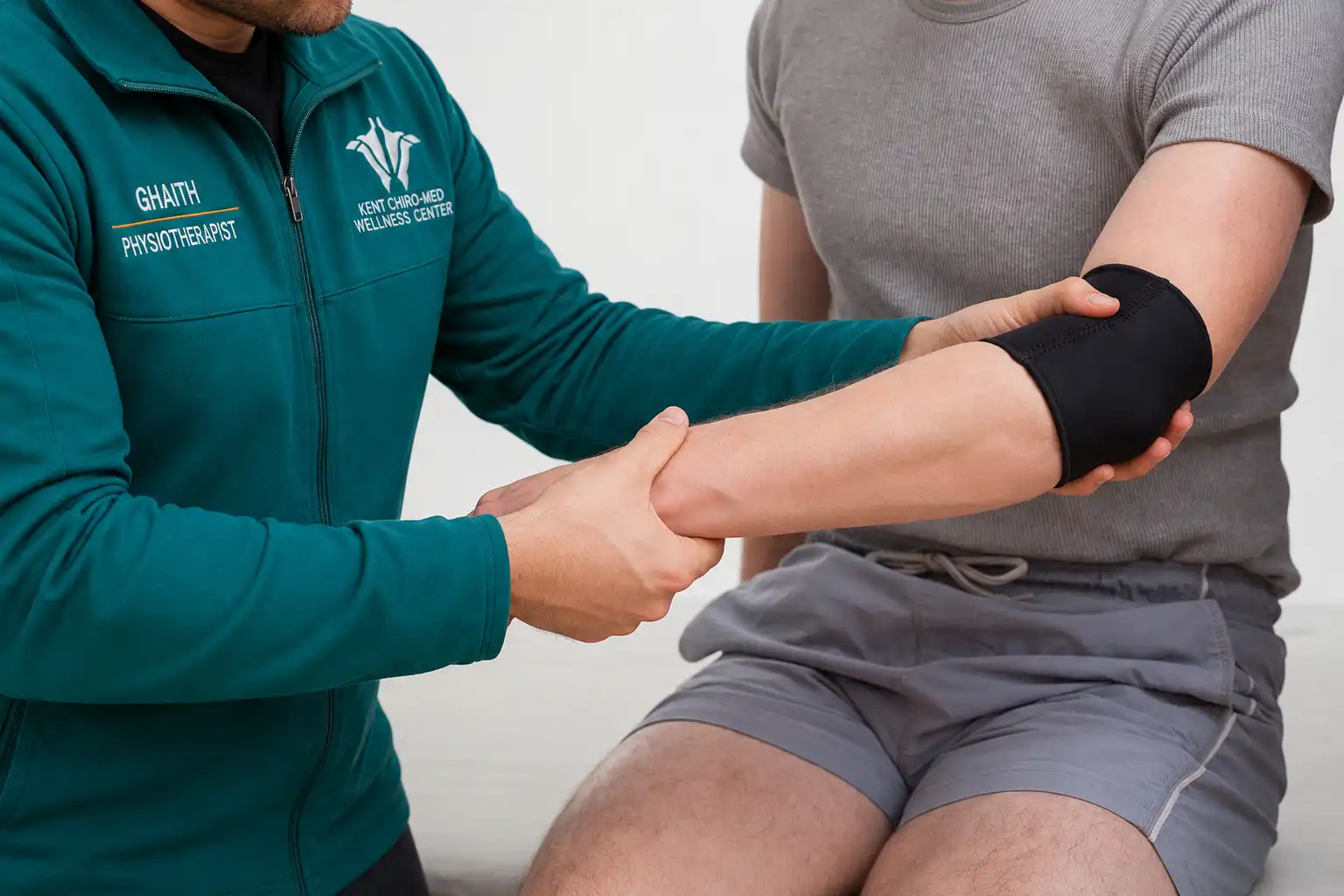
Crimping, gripping, and pulling load the elbow and wrist a lot. Climbers often feel this on the inside or outside of the elbow, or along the forearm. It tends to build slowly, then flare after a jump in volume or a hard crimpy route. Pushing through usually makes it stick around longer. An assessment can help find the cause and guide what to change in your climbing. Learn more: Wrist and Elbow Pain Treatment.
Grip-related forearm pain
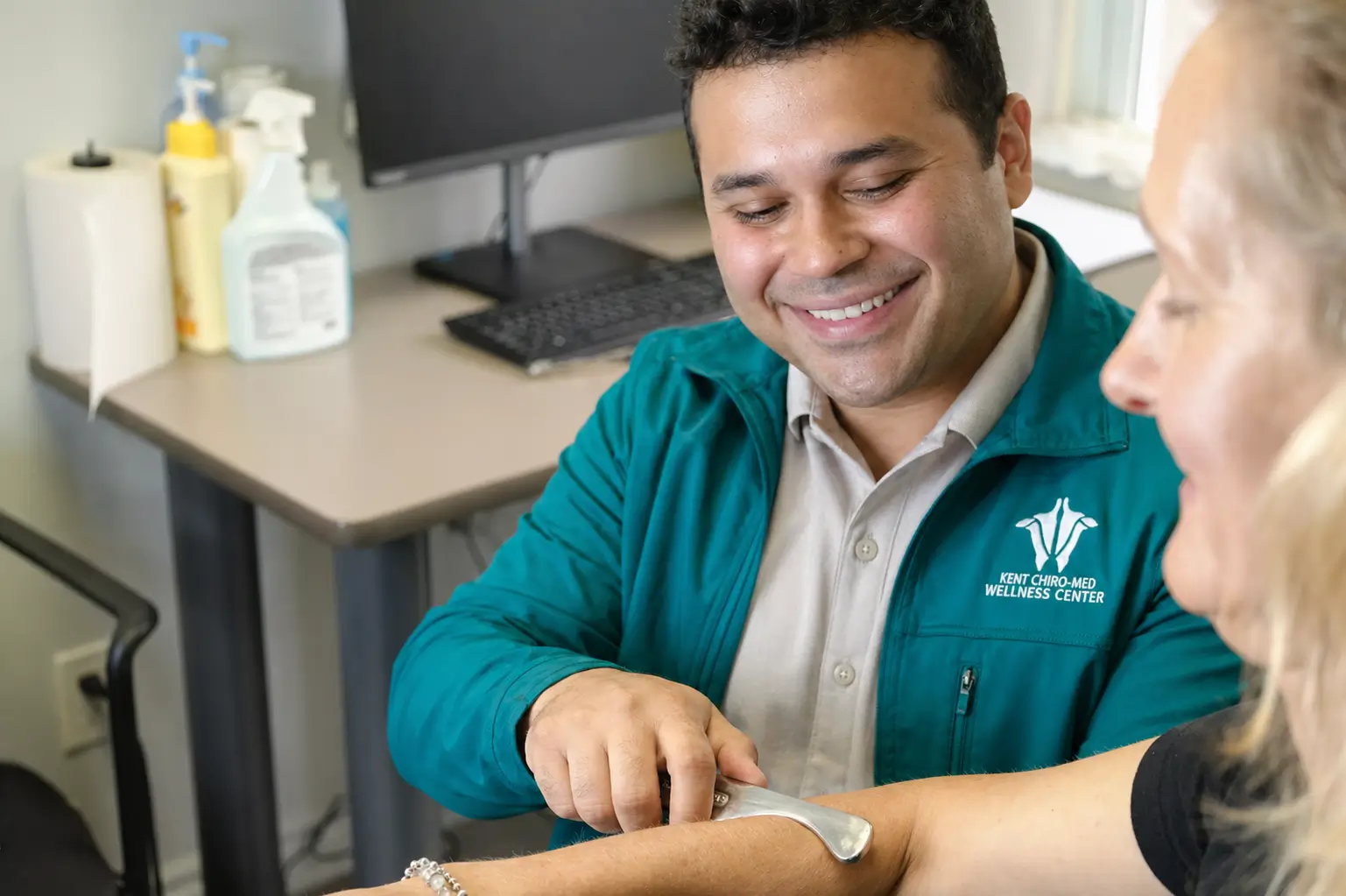
The forearms take the brunt of sustained gripping. Tightness, burning, or a deep ache after climbing is common, especially when you add hangboard work or longer sessions. Some fatigue is normal, but pain that keeps showing up — or that comes with finger or wrist symptoms — is worth a closer look before you load it again.
Neck and upper back tension
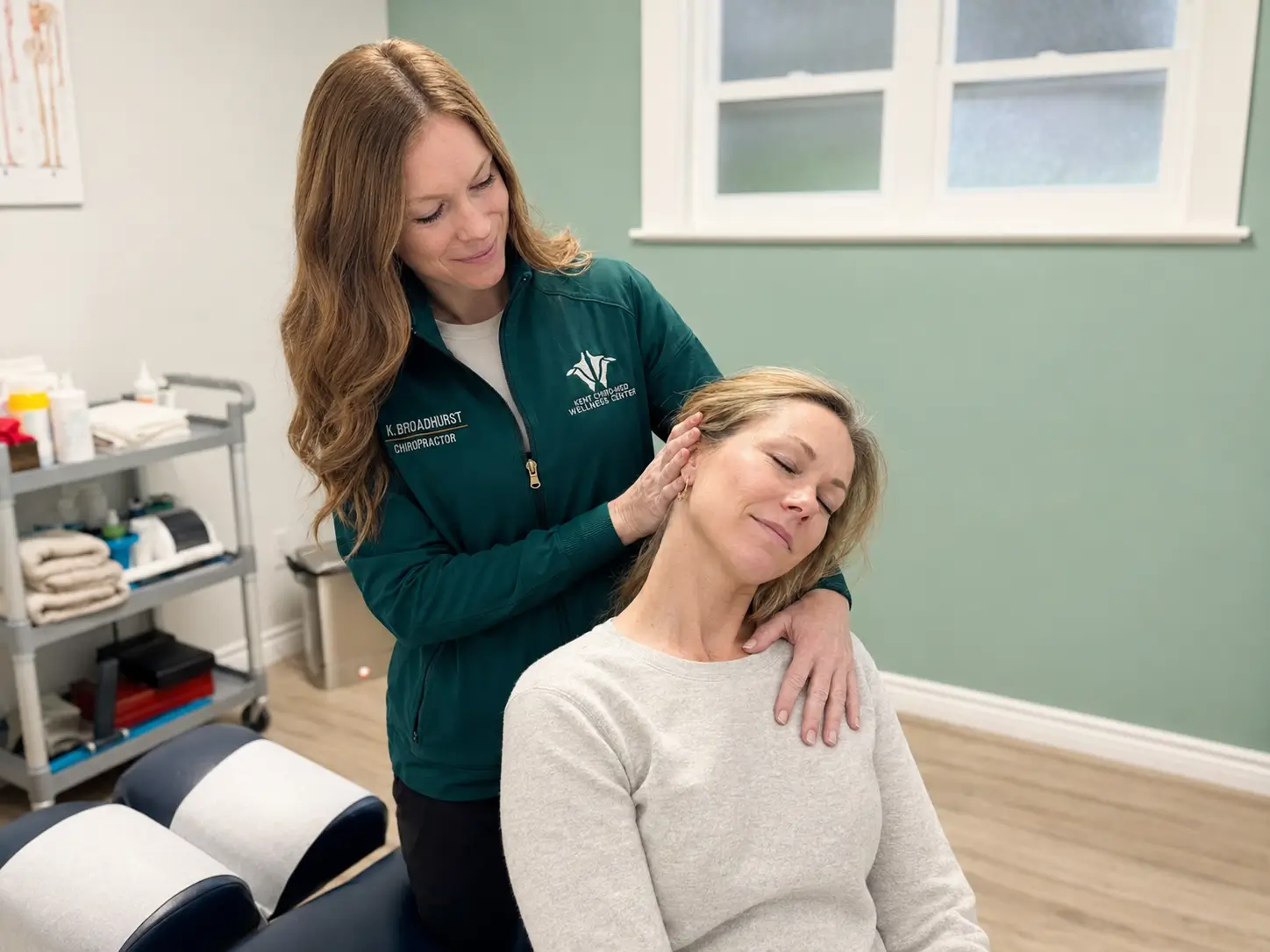
Looking up to spot holds and route-reading for long stretches can leave the neck and upper back tight and sore. This is common and often settles with rest, but ongoing tension, headaches, or pain that spreads into the shoulder is worth assessing. Learn more: Neck Pain Physiotherapy.

Sudden increases in climbing volume
Many climbing injuries are not from one bad move — they come from doing too much, too soon. Adding more sessions, harder grades, or hangboard training all at once can overload tissue before it adapts. Building up gradually, with recovery days between hard sessions, gives fingers, elbows, and shoulders time to keep up.
When recurring pain should be assessed
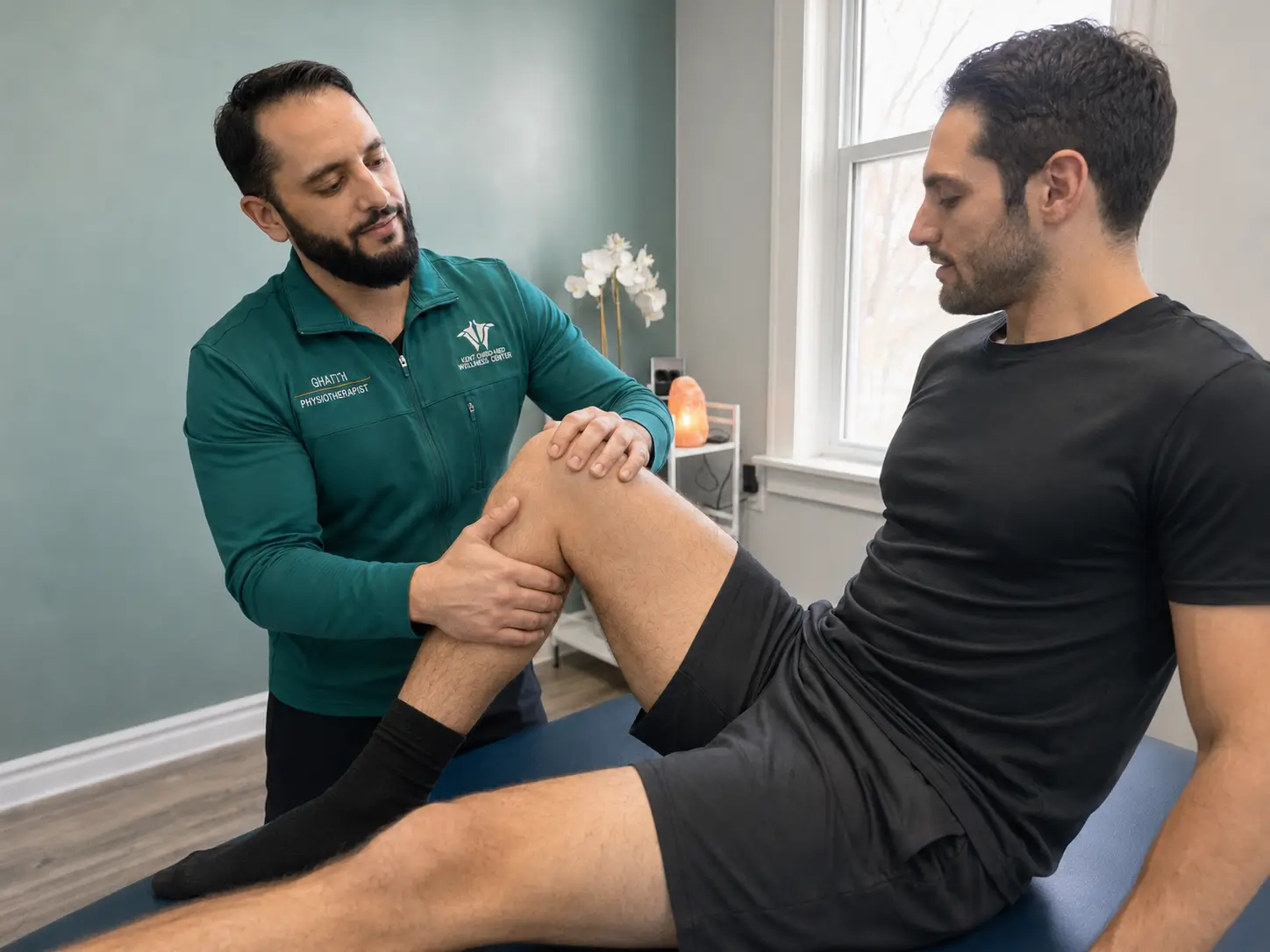
Mild soreness that fades in a day or two is usually fine. Book an assessment when pain keeps coming back, gets worse, wakes you at night, spreads down an arm, or comes with swelling, weakness, or loss of grip. Our sports physiotherapy team can assess the movement, point out what may be irritated, and help guide a safer return to climbing. Learn more: Sports Physiotherapy.
Pain Getting in the Way of Your Climbing?
If shoulder, elbow, wrist, or neck pain is limiting your climbing or daily movement, Kent Chiro-Med can help assess what may be irritated and guide your return to the wall. We are located downtown at 563 Gladstone Ave, close to Ottawa’s climbing gyms.
DAV Climbing and Bouldering Center in Munich Germany is the biggest rock climbing gym in the world. It has the facility of 84000 square feet of top roping, bouldering and indoors.
Jody Miall owns the Coyote Rock Gym. He started his career in climbing in 1989. He has been associated with the rock climbing industry since 1993.
You can easily find a climbing partner at the gym if the gym offers sessions for solo climbers. You can also make friends on a bouldering mat. People are more open to
discussions and conversations at a bouldering mat.
The annual death rate of rock climbers worldwide is 30 deaths each year. This statistic constantly reminds and alarms us of the risks associated with rock climbing.
It is a climbing style. Bouldering is more close to the ground, and there is no usage of ropes or harnesses. There is crash matting on the ground for protection. Bouldering focuses more on rock climbing practices and problem-solving skills so that you can easily move up the wall.
Rock climbing is most popular in the Yosemite National Park, USA. California is one of the best states in the world for rock climbing. Rock climbing in Joshua Tree is one of the best rock climbing experiences in the world. There is hardly any other climbing area in the world with as much history as Yosemite.