Sports Physiotherapy in Ottawa for Athletes Who Can't Afford Downtime
30-minute one-on-one sessions with physios who treat Team Canada athletes, FIFA World Cup physiotherapists, and former Canadian Armed Forces medics. We don’t hand you off to an assistant. We don’t rush you out the door.
Associated With





Why Athletes in Ottawa Choose Our Sports Physio Team
Physios Who Work With Elite Athletes
Our team includes a former Canadian Armed Forces medic, a FIFA World Cup physiotherapist, and clinicians who treat Team Canada athletes every week. You get care built on real sports medicine experience — not textbook theory.
30 Minutes, One-on-One, Every Visit
You get a full 30 minutes with your physio. No assistants. No "come back Thursday so we can finish the assessment." The same physio treats you every session, so we don't repeat questions or restart your progress.
Ottawa's Only TECAR Therapy Clinic
TECAR is a deep-tissue treatment used by pro sports teams in Europe. It heats tissue below the skin to speed up recovery from muscle strains, tendon injuries, and post-surgical rehab. We're the only clinic in Ottawa that offers it.
Physiotherapists + Chiropractors, Same Roof
Most clinics offer physio or chiro. We have both, talking to each other about your case. If your injury needs more than one set of hands, you won't be referred out — you'll be handed across the hall.
Sports Physiotherapy for Every Kind of Athlete
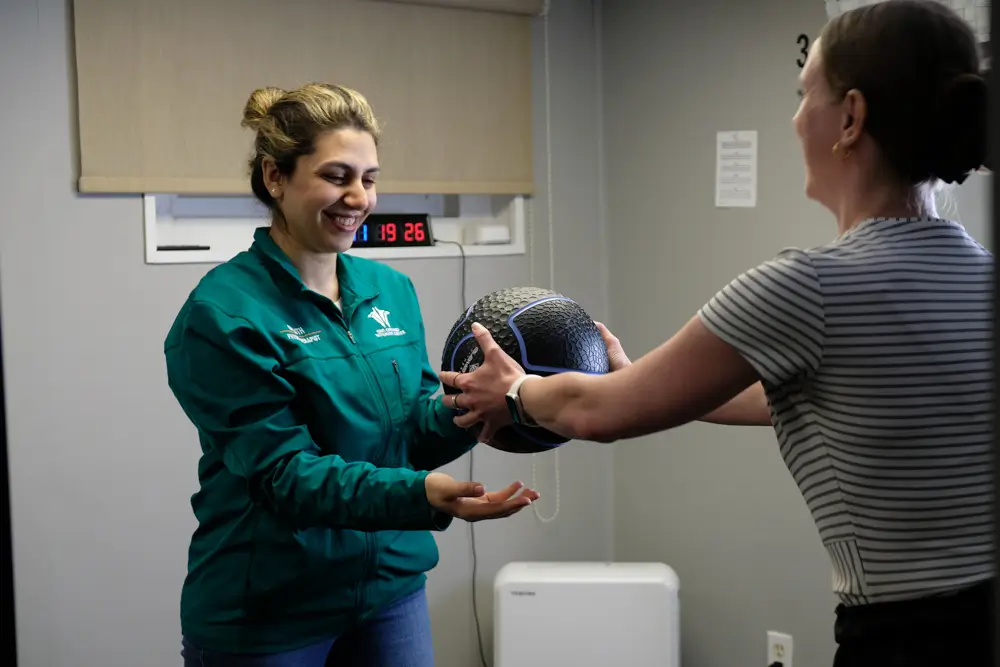
We treat athletes at every level — because injury doesn’t care what league you’re in. Whether you train for a podium or for stress relief after a long week, your recovery matters to us.
- Team Canada members and national-team athletes
- University and college athletes
- Runners, cyclists, and triathletes (IRONMAN, marathon, sprint tri)
- CrossFit and functional fitness athletes
- Combat sports: boxing, MMA, BJJ, Muay Thai
- Team sports: soccer, hockey, basketball, volleyball, football
- Racquet sports: tennis, squash, pickleball, badminton
- Climbing and outdoor athletes
- Youth athletes (with parent present)
- Post-surgery rehab patients
- Weekend warriors and gym regulars
- Dancers and performing artists
Sports Injuries We See Every Week
Ligament Sprains (Knee & Ankle)
If you heard a pop when you cut on the field, felt a sudden twist on the trail, or rolled your ankle stepping off a curb — you may have sprained a ligament. Sprains range from minor stretch injuries to full tears.
How we help: We assess the damage with hands-on testing, then build a plan that mixes shockwave therapy, targeted exercise, and taping when needed. Most Grade 1 sprains feel much better in 2–3 weeks. Grade 2 injuries take 4–6 weeks. We’ll tell you where you stand on day one.
Meniscus Tears
The meniscus is the cushion in your knee. A hard plant-and-twist — common in soccer, skiing, and basketball — can tear it. You’ll often feel locking, catching, or pain with squats.
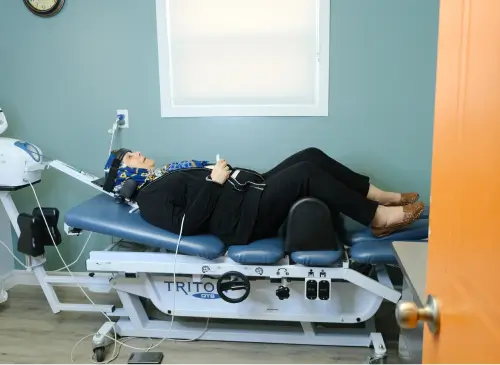
How we help: Not every meniscus tear needs surgery. We use manual therapy, spinal decompression (pelvic alignment often shows up with knee injuries), and progressive loading. Many patients avoid the operating room and return to sport in 6–8 weeks. For broader sports knee injury treatment, our team also handles ACL recovery, runner’s knee, and post-surgical rehab.
Hamstring Strains
A hamstring strain usually happens mid-sprint or during a deep lunge. You’ll feel a sharp pull in the back of your thigh. Severity decides how long you’re out.
How we help: Fast treatment matters. We start with inflammation control and gentle movement, then progress to loading exercises and sport-specific drills. A Grade 1 strain often resolves in 1–3 weeks. A Grade 2 strain takes 4–8 weeks with the right plan.
Shin Splints (Medial Tibial Stress Syndrome)
If you feel a sharp ache along your shin bone — especially when you start running or jumping — you may have shin splints. It’s common in runners, basketball players, and anyone who ramped up training too fast.
How we help: Shin splints are usually a load problem. We look at your running gait, check your footwear, and often recommend custom orthotics. Combined with manual therapy and a smart return-to-run plan, most patients recover in 4–6 weeks.
Rotator Cuff Injuries (Torn or Impinged)
If you can’t lift your arm overhead without pain, feel weakness reaching behind your back, or dread throwing — your rotator cuff may be the issue. Swimmers, volleyball players, tennis players, and overhead lifters see this most.
How we help: We use shockwave therapy, dry needling, and targeted strengthening to rebuild the shoulder. For deeper detail, see our Shoulder Physiotherapy page. Most rotator cuff strains heal in 6–12 weeks without surgery when caught early.
Groin Strains
A groin strain hits when your inner thigh muscles get overstretched — think soccer kicks, hockey lateral movement, or a slip on ice. You’ll feel pain pulling your legs together or taking a wide step.
How we help: Groin strains respond well to hands-on treatment and progressive loading. We assess the hip, pelvis, and nearby muscles because weakness elsewhere often causes the strain. Most Grade 1 strains resolve in 2–4 weeks.
Treatment Methods Built for Athletes

TECAR uses radiofrequency energy to heat tissue below the skin, speeding up blood flow and recovery. Pro sports teams in Europe use it for muscle strains, tendon injuries, and post-surgical rehab. We’re the only clinic in Ottawa that offers it.
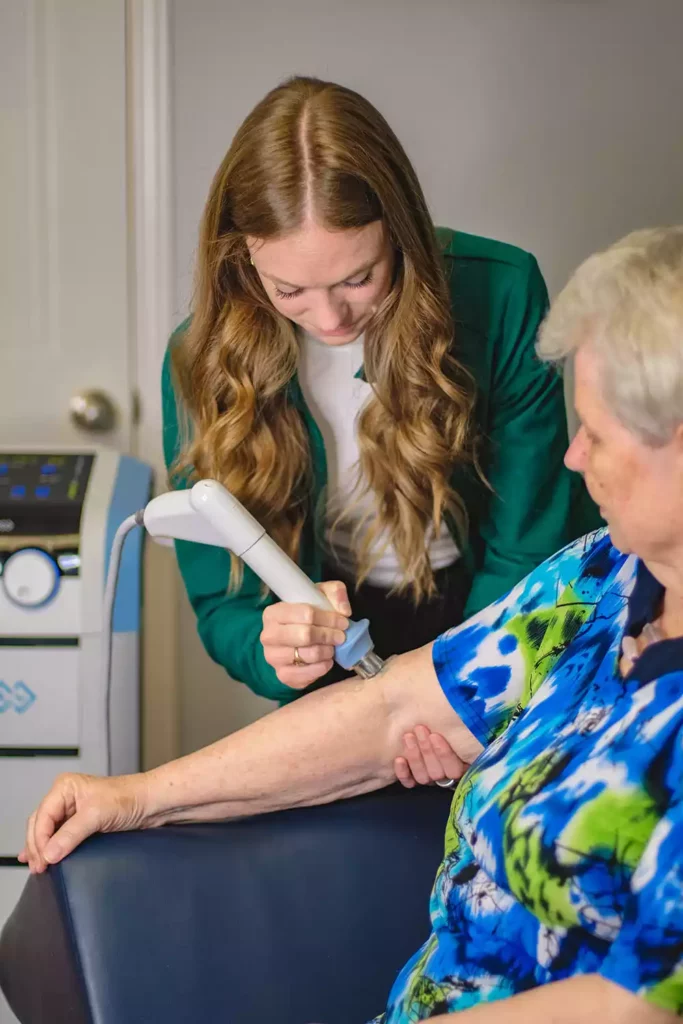
Focused sound waves break up scar tissue and kickstart healing in stubborn tendon injuries. One of our most-used tools for plantar fasciitis, tennis elbow, and rotator cuff tendinopathy.

Fine needles placed in specific points to reduce pain and release tight muscles. Widely used in sports recovery worldwide, including by Olympic teams.
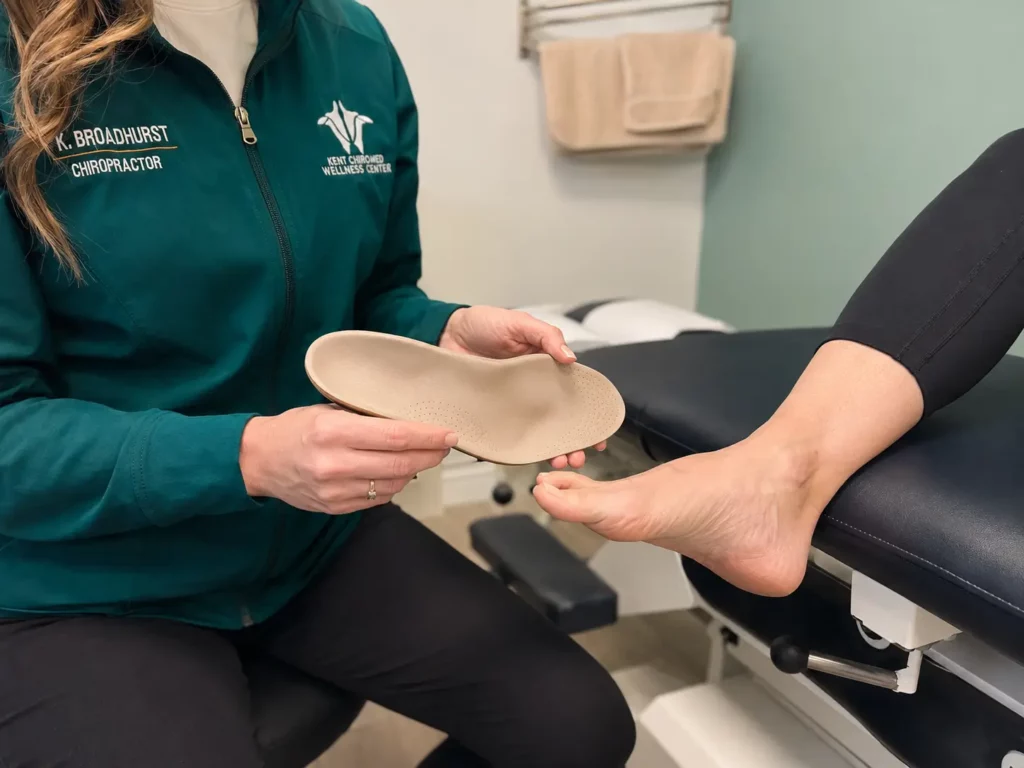
Custom-moulded insoles that correct foot mechanics and reduce impact on ankles, knees, and hips. Essential for runners, court sport athletes, and anyone with foot pain.

Stainless steel tools used to find and treat scar tissue and adhesions. Effective for chronic muscle and tendon problems that don’t respond to regular massage.
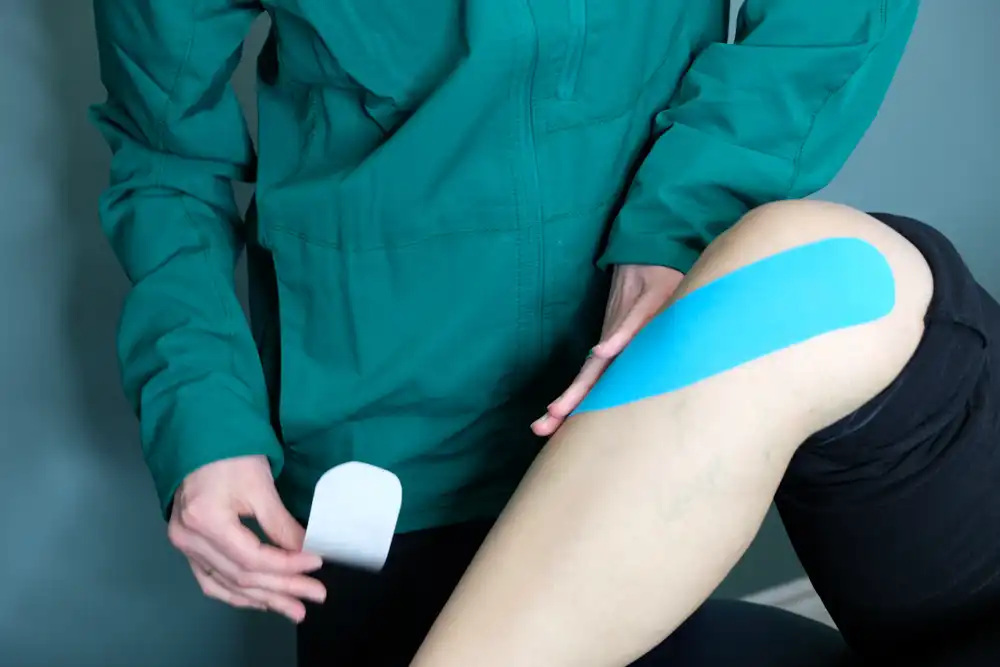
Therapeutic Taping
Kinesiology tape and rigid taping support injured tissues so you can keep moving without re-injuring yourself. Used for everything from ankle sprains to shoulder issues.

Suction cups that lift tissue to improve blood flow and reduce tension. Popular with Olympic swimmers and high-level endurance athletes.
The Physios Behind Your Recovery

Leyla Sefiddashti
Physiotherapist
Master's in Sports Physiotherapy, 7+ Years With Pro Athletes
Leyla holds a Master of Science in Sports Physiotherapy — one of the few physios in Ottawa with a graduate degree built entirely around athletic injury. She’s spent over seven years working with professional athletes, earned the Ontario Physiotherapy Association Scholarship in Rehabilitation, and is certified in dry needling, myofascial release, corrective exercise, and kinesio taping. If your knee or ankle keeps failing you on the field, Leyla is the person who figures out why it keeps happening — not just how to make it feel better today.
Treats: Knee and ankle injuries, chronic sports injuries, functional movement screening, return-to-sport rehab.
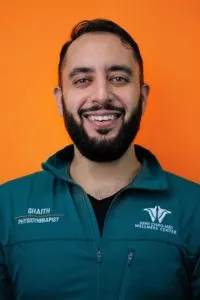
Ghaith Dhaidan
Physiotherapist
Former Canadian Armed Forces Medic
Ghaith spent years treating soldiers in one of the most demanding sports medicine environments on earth. He now brings that experience to athletes at every level — from hip impingements that stop you from squatting, to post-surgical rehab that needs precision and patience. Patients love his ability to explain why you got hurt, not just what to do about it.
Treats: Hip, knee, and shoulder injuries. Post-surgical rehab. Weightlifters, CrossFit athletes, and runners.
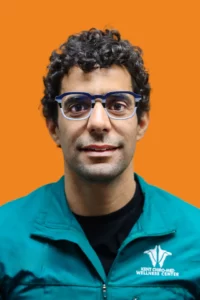
Anass Ouliouel
Physiotherapist
FIFA World Cup Physiotherapist & IRONMAN Finisher
Anass has worked at the highest level of world sport — including the FIFA World Cup. He’s also an IRONMAN finisher, which means he treats athletes as someone who trains and competes alongside them. If you run, cycle, swim, or play team sports, Anass gets it.
Treats: Endurance athletes, soccer players, post-race recovery, overuse injuries.
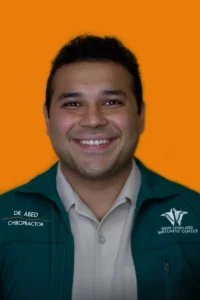
Dr. Abed
Hamidi
Chiropractor
Combat Sports & High-Performance Care
Dr. Abed is the go-to chiropractor for Ottawa’s combat sports community. Local boxing coaches send every fighter to him — whether for injury recovery or maintenance between camps. His style is direct, hands-on, and focused on getting you back in action without wasted visits.
Treats: Combat athletes, contact sport injuries, high-performance maintenance care.
Your First Sports Physiotherapy Visit — Step by Step
We know booking a first appointment feels like an unknown. Here’s exactly what happens.
Step 1: Full Assessment (First 15 Minutes)
Your physio takes a detailed history, runs hands-on tests, and checks your movement. You’ll leave this part with a clear picture of what’s hurt and why.
Step 2: Treatment Plan (Next 5 Minutes)
We walk you through what we think is going on, how many sessions you’ll likely need, and what you should and shouldn’t do between visits. No surprises, no upsells.
Step 3: First Treatment (Last 10 Minutes)
Most patients get hands-on treatment at their first visit. We don’t believe in “come back tomorrow and we’ll start.” You came to feel better. We start today.
Step 4: Your Home Plan
You leave with 2–4 exercises, usually filmed on our in-house app so you can follow along. Recovery happens between visits as much as during them.
Real Results from Real Patients
Jayden Short
The problem: Jayden is a professional squash player who suspected he tore his rotator cuff during a tournament in Vancouver. He saw multiple physios — none could give him a clear answer or a real plan. The injury kept coming back, and the frustration of feeling better only to re-aggravate it was wearing him down mentally and physically.
The treatment: Dr. Ramy Raphael took a ground-up approach. Starting with Jayden’s flat feet, they worked through hip mobility, lower back loosening, glute activation, and shoulder rotation — treating the full chain, not just the painful spot. Every session included a full-body assessment, with tournament-prep visits scheduled the week before competition to make sure he was loose, stable, and ready.
The result: Jayden won the bronze medal at the Canadian Squash Nationals. He moves a step faster, rotates harder through his shots, and engages his core in a way he couldn’t before treatment. In his words: “It’s not like you’re a treatment — it feels like a friendship. Every session, we already feel like we’re chatting.”
Treated by Dr. Ramy Raphael, Chiropractor
Brandon Keel
The problem: Brandon is the head coach and owner of Ottawa Jiu Jitsu. During a rolling arm lock, he compressed an already vulnerable neck — three bulging discs at C4, C5, and C6. What followed was six weeks of the worst nerve pain of his life. No sleeping. A trip to the ER. Pain that never shut off, in any position.
The treatment: Under the care of Dr. Ramy Raphael, Brandon completed a series of chiropractic sessions focused on releasing the locked-up trap muscles, relieving nerve compression, and restoring mobility. Physiotherapy was added to rebuild stability and retrain movement patterns around the injured discs.
The result: Brandon went from unable to sleep to teaching classes every day — pain-free. He’s back coaching at two gyms and working toward a full return to competitive rolling. In his words: “If you’re experiencing any kind of pain in your discs, I would strongly urge you to seek out treatments right away so that you can get your life back together.”
Treated by Dr. Ramy Raphael, Chiropractor
Akash Bakshi
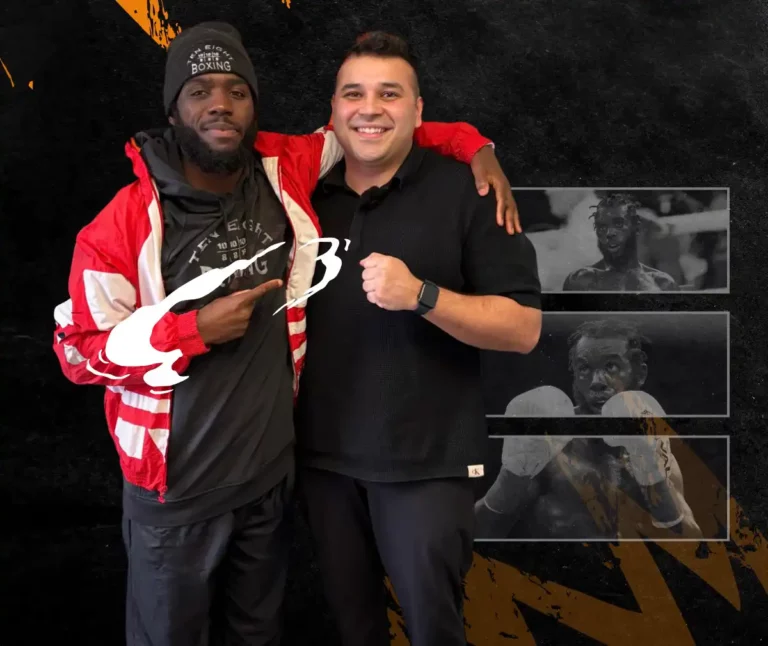
The problem: Akash is an amateur boxer who had been struggling with persistent shin splints and elbow pain. Both injuries were keeping him from training at full intensity — a serious setback for a competitive athlete.
The treatment: Under the care of Dr. Abed Hamidi, Akash completed just 4 sessions of shockwave therapy targeting both the shin and elbow.
The result: Both conditions healed completely. Akash is back in the ring, boxing at 100% intensity with zero pain.
Treated by Dr. Abed Hamidi, Chiropractor
Katrina Cheng
The problem: Katrina was training for her first half marathon when knee pain started coming back with every run. She was afraid she would have to drop out of the race entirely.
The diagnosis: Dr. Courtney Broadhurst assessed Katrina and identified iliotibial band (ITB) syndrome — a common overuse injury in distance runners caused by repetitive friction of the IT band against the outer knee.
The treatment: Over 5 sessions, Katrina received shockwave therapy combined with myofascial release and a tailored home exercise plan that included foam rolling and cross-training to address the root cause.
The result: Katrina completed her first half marathon pain-free. She continues to run comfortably today.
Treated by Dr. Courtney Broadhurst, Chiropractor
Teen Figure Skater — Balance on the Ice
The problem: She was training and competing in figure skating, but her feet turned inward. That made it hard to stay balanced and stable on the ice, and it showed up in daily life too.
The assessment: Dr. Maryam Hassanzadeh assessed her and built a plan around targeted exercises to improve her foot alignment, strength, and stability.
The treatment:She followed a daily home exercise routine that Dr. Maryam tailored to her, doing it almost every day alongside her chiropractic care.
The result: She told us the routine helped her feel stronger, more stable, and better balanced — both on the ice and off it. She went on to win her first gold medal.
Treated by Dr. Maryam Hassanzadeh, Chiropractor


Trusted by people like you
Frequently Asked Questions About Sports Physiotherapy
What does a sports physiotherapist do?
A sports physiotherapist treats injuries caused by sport and exercise — and helps athletes return to performance safely. That includes hands-on treatment, exercise prescription, movement assessment, and injury prevention. Sports physios also guide you on training load, recovery, and when it’s safe to return to competition.
Sports physiotherapy vs. regular physiotherapy — what's the difference?
A regular physiotherapist treats a wide range of conditions — from post-surgery recovery to office-related neck pain. A sports physiotherapist focuses on athletes and active people. The training, testing, and treatment plans are built around one goal: return you to performance, not just daily life. If you play a sport, train seriously, or have a physical job, a sports physio will understand your goals better.
How much does sports physiotherapy cost in Ontario?
Sports physiotherapy in Ontario typically costs $90–$130 per 30-minute session. At Kent Chiro-Med, every session is one-on-one with the same physio every visit. Most extended health plans cover physiotherapy — we direct bill to major insurers so you don’t pay out of pocket.
Do I need a doctor's referral for sports physio?
In Ontario, you don’t need a doctor’s referral to see a physiotherapist at Kent Chiro-Med. Some insurance plans require one for reimbursement — check with your provider. If you need a referral and don’t have a family doctor, we can help guide you.
How many sessions will I need?
Most sports injuries resolve in 4–8 sessions. Minor strains often need 2–3 visits. More serious injuries — post-surgery rehab, chronic tendinopathy, complex pain — may need 8–12 sessions. Your physio gives you a realistic number after your first assessment. We don’t sell packages up front, and we never push more sessions than you need.
Can I get treatment if I'm injured today?
Usually yes. We almost always have same-week openings for new patients. Book online or call the front desk. For urgent injuries — acute sprains, possible fractures — we’ll work to get you in the next business day.
Does insurance cover sports physiotherapy?
Most extended health plans cover physiotherapy and chiropractic care. We direct bill to Sun Life, Manulife, Green Shield, Canada Life, and most major insurers. If you’re treated for a work injury, WSIB covers care at approved clinics. For motor vehicle accident injuries, physiotherapy is covered under your auto insurance.
Are your treatments painful?
We work with your pain tolerance. Some treatments — like shockwave or deep tissue work — can feel uncomfortable during the session. We always explain what you’ll feel before we do anything, and we never push past your tolerance. Some mild soreness after a session is normal; sharp pain is not. Tell your physio and we’ll adjust.
I'm not sure if physio will help. What should I do?
Book a free 15-minute consultation. You’ll meet a physio, talk through your injury, and get an honest answer on whether we can help — or whether you need a different kind of care. No pressure, no cost, no booking required.
Ready to Start Your Recovery?
The longer you wait, the longer your recovery takes. Book your first sports physiotherapy visit today — most sports injuries respond fastest when treatment starts within the first week.
What time works best for you?
Monday – Thursday
Friday
Saturday
Sunday
9 AM – 6 PM
9 AM – 3 PM
8 AM – 3 PM
Closed