

Back Pain Physiotherapy in Ottawa
- Customized Treatment Plans
- Non-Invasive, Drug-Free Relief
- Physiotherapy and chiropractic care in downtown Ottawa
Does Physiotherapy Actually Work for Back Pain?
For most people, yes — and it is what clinical guidelines recommend first.
International clinical guidelines consistently recommend active physiotherapy — exercise, manual therapy and patient education — as a first-line treatment for low back pain, ahead of medication or imaging.
But here is what matters more than the research: your back pain has a specific mechanical cause. A tight hip flexor. A weak glute. A stiff thoracic spine. A disc that’s irritating a nerve. Until someone identifies your specific cause, generic stretching and painkillers tend to disappoint.
That is exactly what physiotherapy does. Your physiotherapist assesses how you move, identifies the dysfunction driving your pain, and builds a treatment plan around the cause — not just the symptom.
Experiencing shoulder pain instead?
Visit our dedicated shoulder physiotherapy page for specialized shoulder pain treatment — including rotator cuff, frozen shoulder, and impingement care.
Dealing with neck pain too? Our neck pain physiotherapy team treats stiffness, limited movement, and pain after sleeping wrong.
What Type of Back Pain Do You Have?
The treatment that works depends on the type of back pain you're dealing with. Our Ottawa clinic sees these most often:

Mechanical Low Back Pain (Most Common)
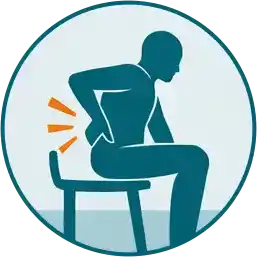
This is the dull, achy stiffness that gets worse after sitting all day or lifting something awkwardly. It accounts for roughly 40% of the back pain cases we treat. The cause is usually a combination of weak core muscles, tight hip flexors, and poor movement habits. It is common in people who sit for long stretches at work.
What helps: Manual therapy to release tight muscles, spinal mobilization to restore joint movement, and a strengthening program focused on your core and glutes. How long it takes varies with how long you have had it and what is driving it.

Disc-Related Back Pain
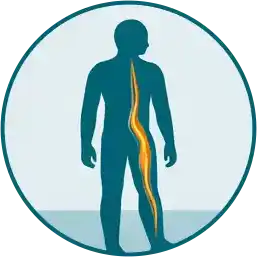
If your back pain shoots down your leg, or you feel numbness and tingling, a disc may be pressing on a nerve. This is more common in patients aged 30 to 50 and often starts after a bending or lifting incident. About 40% of our back pain patients have some disc involvement.
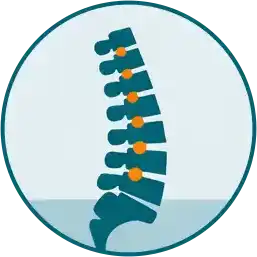
What helps: Directional preference exercises (McKenzie method), nerve glides, manual traction, and guidance on which positions to avoid while it settles.
Worth knowing: most disc-related pain settles without surgery. Around 80% of people with sciatica from a disc improve within eight weeks, and the disc itself often reabsorbs over time. Our job is to help you manage symptoms and keep moving while that happens — and to tell you if we think you need a surgical opinion.

Degenerative Back Pain
Wear and tear on the spine — arthritis, spinal stenosis, disc degeneration — is common after age 50. The pain tends to be chronic, worse with standing or walking, and better when you sit or lean forward.
What helps: TECAR therapy, which our practitioners have found most useful for degenerative pain, alongside gentle mobilisation and a graduated strengthening program. The goal shifts from “cure” to long-term management and function.

SI Joint Dysfunction
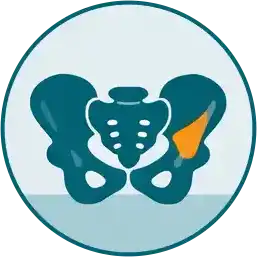
Pain on one side of your lower back, right at the belt line, that gets worse with single-leg activities (climbing stairs, getting out of a car). SI joint problems are frequently misdiagnosed as disc issues.
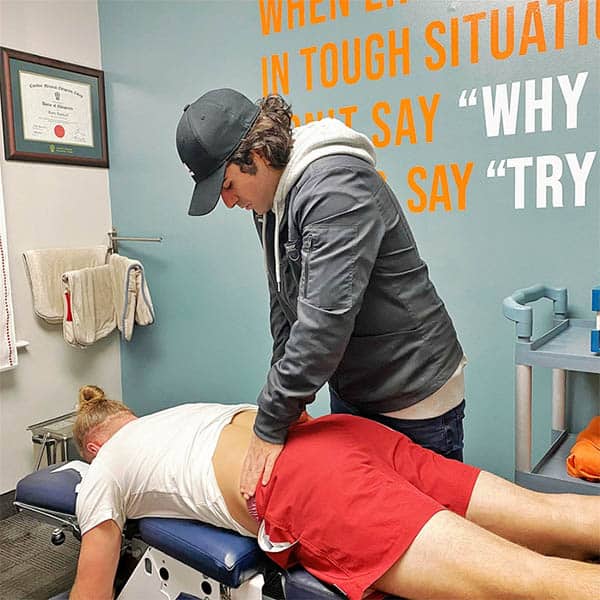
What helps: SI joint mobilization or manipulation, glute and core strengthening, and correcting pelvic asymmetry. This type often responds well to treatment.
What Happens During Your First Back Pain Physiotherapy Session
Your first visit is 60 minutes. Here is exactly what to expect:
Step 1: Your physiotherapist asks about your pain history, daily activities, work setup, and what you’ve already tried. This conversation usually takes 10 to 15 minutes.
Step 2: A physical assessment follows: range of motion, strength testing, nerve function, posture analysis, and specific orthopaedic tests to identify the pain source.
Step 3: Your physiotherapist explains what they found — in plain language — and outlines a treatment plan with clear goals and a realistic timeline.
Step 4: You receive hands-on treatment in a private room. This may include manual therapy, joint mobilization, soft tissue release, or TECAR therapy depending on your diagnosis.
Step 5: You leave with 2 to 3 home exercises specific to your condition and a clear plan for your next visit.
Every session at Kent Chiro-Med is one-on-one with your physiotherapist in a private treatment room.
3 simple low-back exercises with Dr. Courtney
Duration: 1:07 • Dr. Courtney Broadhurst guides you through three exercises for low back pain
How We Treat Back Pain at Kent Chiro-Med
Every treatment plan is built around your specific diagnosis. Here are the tools your physiotherapist may use:
Manual Therapy & Joint Mobilization
Hands-on techniques to restore movement in stiff spinal joints and release tight muscles. This includes soft tissue therapy, myofascial release, and joint mobilization at various speeds and pressures. Your chiropractor may also use spinal manipulation.
Targeted Exercise Programs
Exercise is the single most important part of back pain recovery. Your physiotherapist prescribes specific exercises based on your condition:
- Core stability: Planks, dead bugs, bird-dogs
- Glute activation: Bridges, clamshells, hip thrusts
- Hip flexor mobility: Half-kneeling stretches, hip rotations
- Nerve mobility: Sciatic nerve glides, slump stretches (for disc-related pain)
You’ll start with 2 to 3 exercises and progress as your pain decreases and strength improves.
TECAR (Transfer of Energy Capacitive and Resistive) uses radiofrequency energy to create warmth deep in the tissue, which increases blood flow and helps muscles relax. We use it alongside manual therapy and exercise.
Our practitioners have found it most useful for degenerative low back pain and chronic muscle tension. For disc-related pain we use it as part of a wider plan alongside assessment and active rehab, rather than as a primary treatment.
We use the Winback Back 1S, a Class II medical device licensed by Health Canada (licence 109716).
Posture & Ergonomic Correction
A lot of the back pain we see is linked to sedentary work and movement habits. Your physiotherapist will assess your workstation setup and teach you specific changes — monitor height, chair position, standing breaks — that reduce the daily load on your spine.
Who We Help
Low back pain is the most common reason people come to us. Most are office workers and students, and we also see athletes with lifting injuries and older adults with degenerative changes. Most patients are sedentary office workers or students; we also treat athletes with lifting injuries and older adults with degenerative changes.
How Long Back Pain Usually Takes to Settle
People always ask how long this will take. These are general ranges reported for these conditions — not a timeline for your back, and not a promise about our treatment. They vary with severity, how long you have had it, and how consistently you do your home exercises.
| Type of Back Pain | Timeline to Improvement |
|---|---|
| Mechanical low back pain | 2–6 weeks |
| Disc-related pain | 6–12 weeks |
| Degenerative / chronic | Ongoing management |
| SI joint dysfunction | 2–4 weeks |
These are guidelines, not guarantees. Your physiotherapist will track your progress at every visit and adjust the plan if you’re not improving as expected.
Case Notes from Our Clinic
Chronic Low Back Pain
A woman in her mid-thirties had dealt with lower back stiffness for two years. She had tried massage, hot baths and over-the-counter painkillers, and nothing lasted. By the time she came in she could not sit through a full workday without pain.
What we found: Weak glutes, extremely tight hip flexors, and restricted thoracic spine mobility — classic lower-cross syndrome from years of desk work.
The treatment: Manual therapy, TECAR for the deep muscle tension, and a home exercise program focused on glute bridges, planks, and hip flexor stretches. We also adjusted her workstation setup.
Over about six sessions across four weeks she reported a large reduction in her pain. She now does her home exercises several times a week and comes in periodically.
Disc Herniation
A man in his late forties felt a sharp pain in his lower back during a deadlift. Within days the pain was radiating down his left leg with numbness in his foot. Imaging confirmed an L4-L5 disc herniation.
His plan included McKenzie extension exercises, nerve glides, gentle spinal mobilisation, and a graduated return to activity, coordinated with his chiropractor.
Over about ten sessions across eight weeks his leg pain settled. He returned to the gym on a modified program. Surgery had been raised as a possibility earlier and he has not needed it.
Degenerative Disc Disease
A woman in her early sixties had lived with chronic low back pain for over a decade. Walking more than ten minutes made the pain unbearable. She assumed it was just ageing and something she had to accept.
What we found: Multi-level degenerative changes in the lumbar spine with mild spinal stenosis. Significant deconditioning and poor balance.
The treatment: TECAR therapy for pain management, gentle flexion-based mobility work, and a progressive walking and strengthening program. We focused on function — not fixing the degeneration.
Over about eight sessions her walking tolerance improved substantially. She now maintains her function with a home exercise routine and periodic check-ins.
These are individual patient experiences. Results are not typical and will not be the same for everyone. What treatment suits you depends on your assessment.
Trusted by people like you
Why Ottawa Patients Choose Kent Chiro-Med for Back Pain
Every session takes place in a private room with your practitioner.
818 Google reviews with a 5.0 rating
A highly rated physiotherapy and chiropractic clinic in downtown Ottawa
Integrated care
Physiotherapy and chiropractic under one roof, so your treatment is coordinated
TECAR therapy
Radiofrequency treatment used alongside hands-on care and exercise
Clear pricing
Initial physiotherapy assessment $135 (60 minutes), follow-up sessions $105 (30 minutes). See the full price list.
Evenings & Saturdays Available
Can’t make it during business hours? We offer evening and Saturday appointments so treatment fits your schedule, not the other way around.
Before You Book
Common Questions Patients Ask
Real questions we hear at the clinic — answered clearly, so you know what to expect.
How long will it take to feel better?
Recovery depends on the cause of your pain, how severe it is, how long you have had it, and how closely you follow your care plan. Some patients feel better quickly. Others may need several weeks or longer to fully recover.
At Kent Chiro-Med, the first step is to assess what may be causing your pain, explain what is irritated, and build a treatment plan that supports both pain relief and better long-term movement. Here is what to expect at your first visit.
Can I keep going to the gym during treatment?
In many cases, you do not need to stop going to the gym completely. The better approach is often to adjust the right exercises, lower the intensity for a while, avoid movements that make symptoms worse, and rebuild gradually.
Your practitioner can help you understand which movements are safe, which ones to avoid for now, and when it may be time to progress. If you train hard, our sports physiotherapy team can guide a safer return to activity.
Should I take time off work?
Not always. Many patients can keep working with modified duties, especially when the job can be adjusted to reduce strain on the painful area.
If your pain is severe, getting worse, limiting your movement, or affecting your ability to work safely, a proper assessment can help decide whether rest, modified duties, or more care may be needed.
Can I keep working with modified duties?
Often, yes. Modified duties can help you stay active while taking stress off the injured or irritated area. This may mean avoiding heavy lifting, repetitive bending, long periods of sitting or standing, or movements that trigger pain.
The right recommendation depends on your condition, your job demands, and what we find during your assessment.
Why does pain come back?
Pain relief and full recovery are not always the same thing. Some patients feel better before the underlying movement habits, strength imbalances, posture patterns, or joint restrictions are fully addressed. When that happens, the pain can return.
Ongoing or maintenance care may help support long-term mobility, reduce recurring flare-ups, and help you stay active after the initial pain has improved. The right plan depends on your condition, goals, and lifestyle. You can see treatment options and pricing here.
What happens during the first visit?
Your first visit is focused on understanding what is causing your pain and helping you feel clear about the next step. Your practitioner will review your health history, ask about your symptoms, assess your movement, and explain what may be contributing to the issue.
From there, they will recommend a treatment plan based on your condition, goals, and comfort level. When appropriate, treatment may begin during your first visit. If you are in severe pain, your practitioner may set aside time to begin treatment to reduce the pain, as long as the assessment and diagnostic process is not compromised.
What if I'm nervous about a chiropractic adjustment?
Feeling nervous about a chiropractic adjustment is completely normal, especially on your first visit. At Kent Chiro-Med, care starts with an assessment and a conversation about your symptoms, your comfort level, and your treatment options.
Our chiropractors are evidence-based and science-driven, so they have many tools to work with, and an adjustment is just one of them. If an adjustment is not right for you, or you are not comfortable with it, your practitioner can suggest other options such as mobilization, soft tissue therapy, acupuncture, rehab exercises, or modalities like shockwave therapy, TECAR therapy, spinal decompression, or physiotherapy-based care.
The goal is always to match the treatment to your condition and your comfort level.
How many physiotherapy sessions do I need for back pain?
It depends on the type and severity of your back pain. There is a table further up this page with the general ranges reported for common back problems — those are a guide, not a prediction for your back. Your physiotherapist will set clear progress goals at your first visit and adjust the plan based on how you respond.
Does physiotherapy help lower back pain?
Yes. Physiotherapy is one of the most effective non-surgical treatments for lower back pain. It works by identifying the specific cause of your pain — whether that’s a stiff joint, weak muscle, tight tissue, or nerve irritation — and treating that cause directly. International clinical guidelines recommend physiotherapy as a first-line treatment for both acute and chronic low back pain.
Is physiotherapy better than chiropractic for back pain?
Both have a role. Chiropractic care works on joint movement and the surrounding soft tissue; physiotherapy builds strength and stability. For many back problems we use both. At Kent Chiro-Med, your physiotherapist and chiropractor coordinate your care under one roof so you get the benefits of both.
Can physiotherapy help sciatica?
Often, yes. Sciatica — pain radiating from the lower back down the leg — is usually caused by a disc irritating a nerve. Physiotherapy uses specific exercises, manual therapy and activity modification to help you manage symptoms and keep moving.
It is also worth knowing that most sciatica settles without surgery on its own timeline. Around 80% of people improve within eight weeks. Treatment supports that process rather than replacing it. If your symptoms are getting worse, or you develop new weakness or numbness, tell us — that needs to be seen promptly.
How much does physiotherapy cost in Ottawa?
At Kent Chiro-Med, an initial physiotherapy assessment is $135 (60 minutes) and follow-up treatments are $105 (30 minutes). Most extended health plans cover physiotherapy, though coverage varies by plan. Check your coverage before your visit — our team can explain payment and receipt arrangements.
Still have a question?
The clearest next step is a proper assessment.
Trauma‑related low‑back pain or severe disc herniations may require a multidisciplinary approach and, in rare cases, surgical consultation. Our team collaborates with neurologists, orthopaedic specialists and other healthcare providers when conservative care is not sufficient.
Stop Living With Back Pain
Whether it started last week or ten years ago, an assessment is a sensible first step.
When you are ready, book an assessment.